
Analysts. Nicomakhov ethics. Aristotle
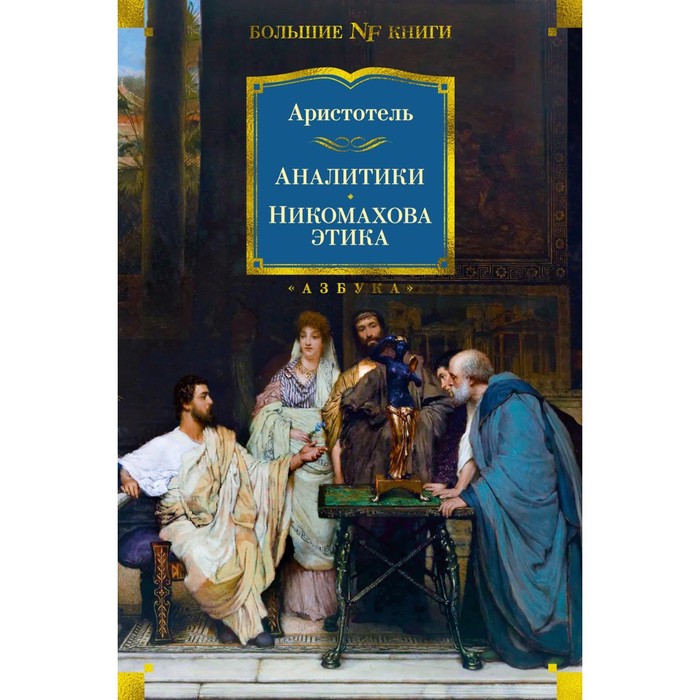
Aristotle is one of the greatest thinkers of antiquity, Plato's student and educator Alexander of Macedon, who summarize in his works the experience of the classical era of ancient Greek philosophy and had a huge impact on the development of European and world culture, an encyclopedist who stood at the origins of modern science. Aristotle developed one of the first universal models of the universe and an integral system of scientific knowledge, covering a variety of spheres of human life, outlined the circle of concepts and introduced the terminology that are still used in the philosophical vocabulary and largely determine the landmarks and horizons of modern scientific thinking.
The publication included the most important logical treatises of Aristotle, which made up the "organ" ("Categories", the first and second "analysts", "On interpretation", etc.), as well as "Nicomakhov ethics", a treatise converted To the problems of morality in which the philosopher poses and comprehensively analyzes the most important issues of human being: what is good, happiness and justice? In addition, the book includes “physics”-the fundamental treatise of Aristotle, which serves as a kind of introduction to all other natural-scientific works of the thinker, including those that we today belong to the field of biology and psychology. Aristotelian “physics” has little to do with science, which is called physics in our time, nevertheless, this treatise is still considered one of the highest achievements of human thought in relation to the science of nature.
| Characteristics | |
| A country | Russia |
| Age | From 16 years old |
| Author | Aristotle |
| Number of pages | 736 |
| The year of publishing | 2024 |
| Type of cover | Hard cover |
| Type of philosophy | Antiquity |
There are no reviews for this product.