
Bergson and German philosophy. 1907–1932. Zanfi K.
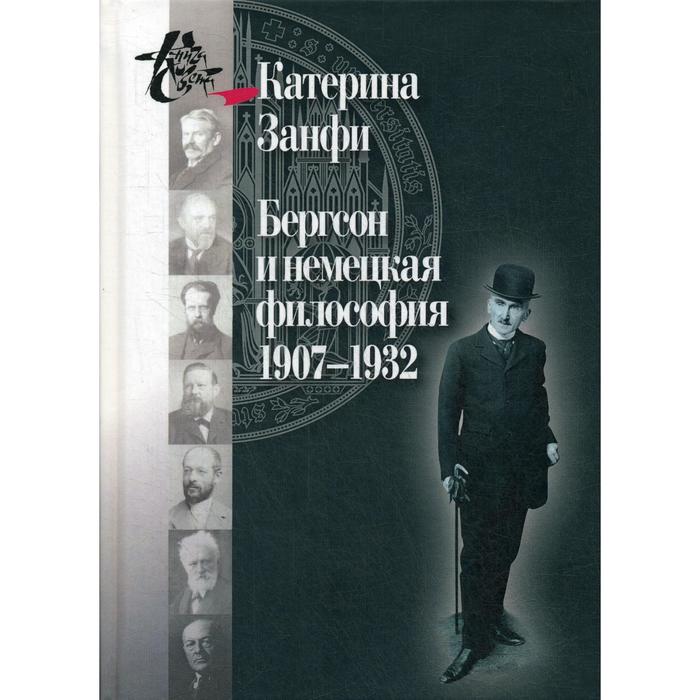
In the book, which the author called “Geofilosophical Atlas”, on the basis of a large number of materials and documents, including archival, the history of the philosophical contacts of Bergson and German thinkers in the first third of the 20th century is traced in detail. The stops of the promotion of Bergson's ideas in Germany were the stops of four cities - the centers of special philosophical traditions: Ian, where neo -resident R. Oicen and his students worked; Berlin, where Bergson's ideas were largely perceived by G. Zimmel; Heidelberg, where Bergsonism was interpreted by the neovalist X. Drish, the philosopher of culture and theologian E. Trölch, as well as representatives of neo -Kantianism -V. Windelband, Rickert and E, Cassirer; Finally, Gettingen, where M. Scheler showed great interest in Bergson's teaching. The author shows that dialogues with German philosophers, as well as the experience of the First World War significantly influenced the evolution of Bergson's views, reflected in the ethical-religious concept set forth in the “two sources of morality and religion” (1932).
the book K. Zanfi, who discovers many new pages of the history of Western philosophy of the first third of the XX century, will be interesting to both specialists and a wide reader audience.
| Characteristics | |
| A country | Russia |
| Author | Zanfi Katerina |
| Kit | No |
| Number of pages | 352 |
| The year of publishing | 2020 |
| Type of cover | Hard cover |
| Type of paper | Offset |
| Type of philosophy | New time |
There are no reviews for this product.