
Cleshchevin seeds "Ordinary", 3 pcs.
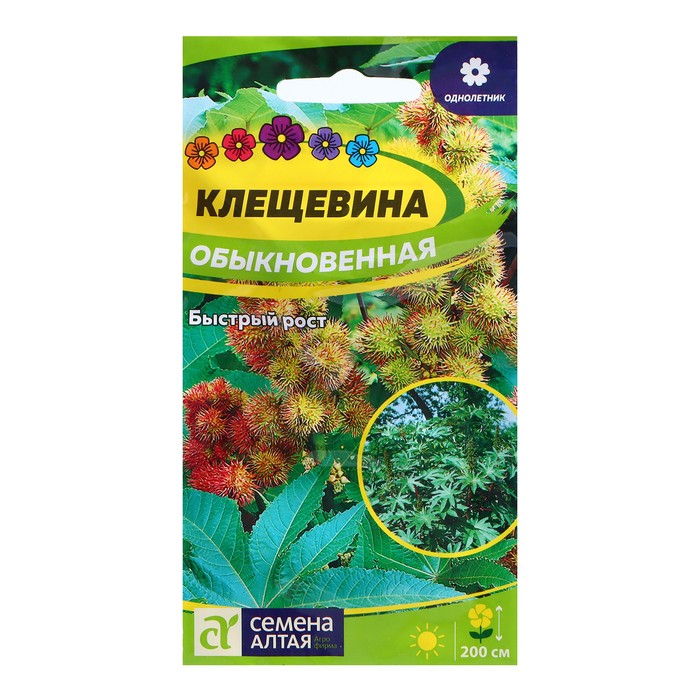
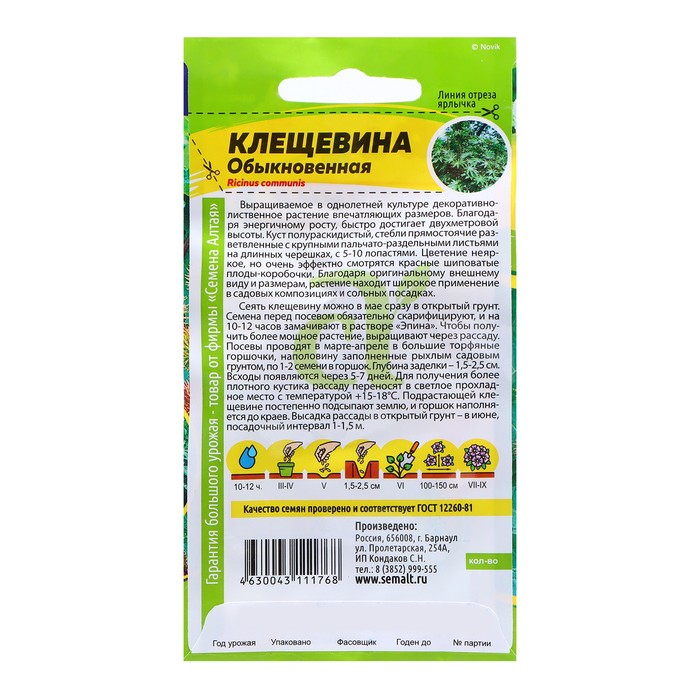


The homeland of the plant is Africa, where it can still be found in the wild. However, having reached the shores of America, it spread very quickly there, having “mastered” huge spaces. With its unusual and not quite harmonious name, it “owes” the form of seeds resembling the outlines of the tick. Ricinus (tick) - called it the Roman scientist Pliny back in the 1st century of our era. Before getting into Europe, Kleshchevina overcame a long way - India, Asia. In the Caucasus, she received a new name - “Turkish hemp”. Initially, Europeans attracted the decorativeness of the plant, and only then the excellent qualities of oil received from its seeds were identified. It was called castor and began to be widely used for various purposes, depending on the production method: hot spin - in technology: aviation, instrumentation, in the production of paint, soap, plastic, insulating materials, artificial fiber; Cold spill - in medicine: as a laxative, bactericidal agent, in the manufacture of various ointments. In our country, Kleschevin on an industrial scale began to be cultivated relatively recently, since previously the needs in castor oil were satisfied with imported supply. When growing a plant in your own garden, do not try to make oil at home. Seeds contain a very poisonous substance that can only be neutralized with a special processing technology.
| Characteristics | |
| A country | Russia |
| Agronomic expiration date, years | 4 |
| Ampelous | No |
| Appointment | For indoor growing |
| Attitude to light | Feat -loving |
| Color | Multi -colored |
| Curly (vines) | No |
| Features of growing | Open soil |
| Flowering period | Summer |
| In the shape of a bush | Bush |
| Sowing for seedlings | March |
| Sukhotzet | No |
| Terry | No |
| The height of an adult plant | Medium -sized (30 cm - 1 m) |
| Variety | Blooming |
| Vegetation | Annuals |
There are no reviews for this product.