
Dictionary of own names in Russian riddles, proverbs, sayings and idioms. Kovshova M.L.
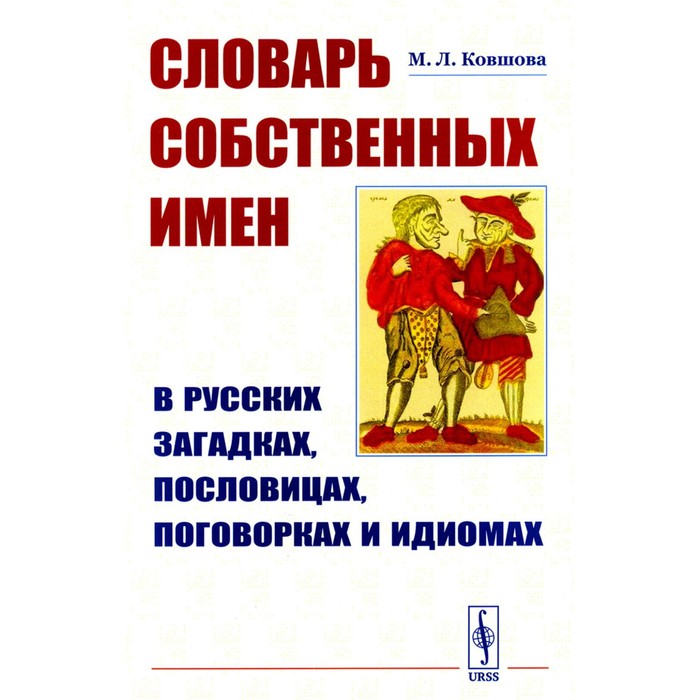
This dictionary describes its own names - anthroponyms intended to call anthropic and anthropomorphic (similar to a person) images in Russian paremias and idioms. The dictionary is an innovative lexicographic product that has no analogues in world practice. It is based on a linguoculturological principle of describing paremia and idiom as signs capable of storing and transmitting cultural information from generation to generation, including using such a demonstration component as its own name. The dictionary consists of three blocks: “Own name in riddles and guesses”; “Own name in proverbs and sayings”; "Own name in idioms." The principles of description in each block are determined by the features of the use of own names in different genres of folklore - riddles, proverbs, sayings and phraseological units of the language - idioms.
The dictionary invites the reader to find out what anthroponyms, as well as the names of which mythological, religious , literary, historical characters in the history of Russian and world culture, were “selected” with speech practice and fixed in Russian paremias and idiots. The dictionary presents its own names direct and derivatives (including folk forms of personal names), genuine and artificial, their structures and structures in paremias and idioms. The dictionary is equipped with the necessary explanations of a historical, ethimological, semantic and cultural nature and references to the sources of the material.
The dictionary is intended for philologists, linguistic culturalists, teachers, writers, journalists and a wide range of inquisitive readers.
| Characteristics | |
| A country | Russia |
| Author | Kovshova Maria Lvovna |
| Number of pages | 352 |
| The subject of the book | Humanitarian sciences |
| The year of publishing | 2023 |
| Type of cover | Soft binding |
There are no reviews for this product.