
Dummy. What the Internet does with our brains. Nicholas Carr
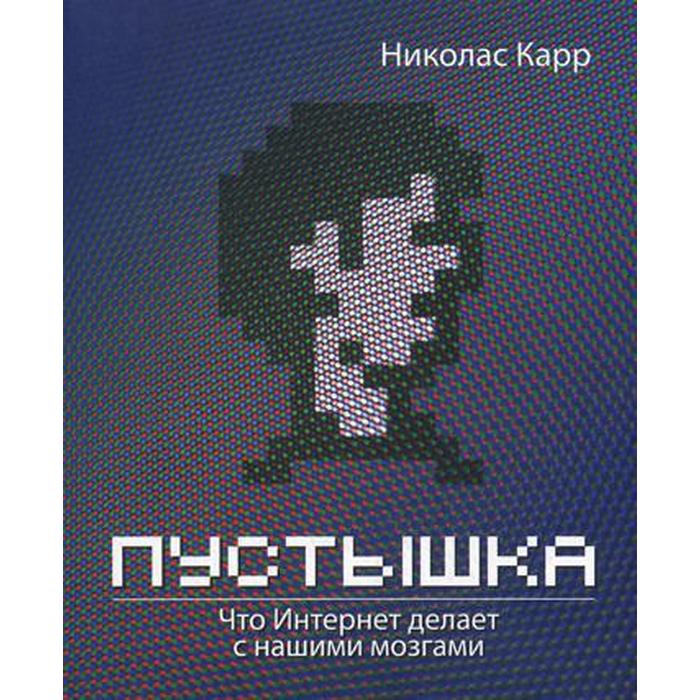
The book represents the most convincing study of the cultural and intellectual influence of the Internet. Having described how for centuries human thought has been formed by the “tools of the mind” - from the alphabet to cards, printed press, watches and computer - Carr quotes the impressive list of recent achievements in the field of neuronauki. As historical and scientific data show, our brain changes under the influence of experience, and the technologies that we use to search, storage and exchange of information are literally changing the routes of our neural connections.
Based on the ideas of thinkers from Plato to McLuen, Carr proves that any information technology carries a certain intellectual ethics - a set of assumptions about the nature of knowledge and intelligence. He shows how the printed book helped to focus our attention, promoting deeper and more creative thinking. The Internet, on the contrary, encourages us to consume quick unrelated pieces of information from many sources. This is the ethics of the industrial era, the ethics of speed and efficiency, optimized production and consumption - and now the network is reorganizing us in its image and likeness. We become adherents of fast and superficial scanning, but we lose the ability to concentrate, reflection and reflection.
Partly intellectual history, partly popular science and cultural criticism, the book is full of wonderful stories: about Friedrich Nietzsche, who is fighting with a printing machine, Sigmund Freude, dissecting the brains of marine inhabitants, Nathaniele Hotorn, reflecting on the loud arrival of the engine. This is a book that will forever change how and what we think about our brains.
| Characteristics | |
| A country | Russia |
| Author | Carr Nicholas |
| Kit | No |
| Number of pages | 256 |
| The year of publishing | 2012 |
| Type of cover | Soft binding |
There are no reviews for this product.