
Eugene Onegin. Pushkin, Alexander Sergeyevich
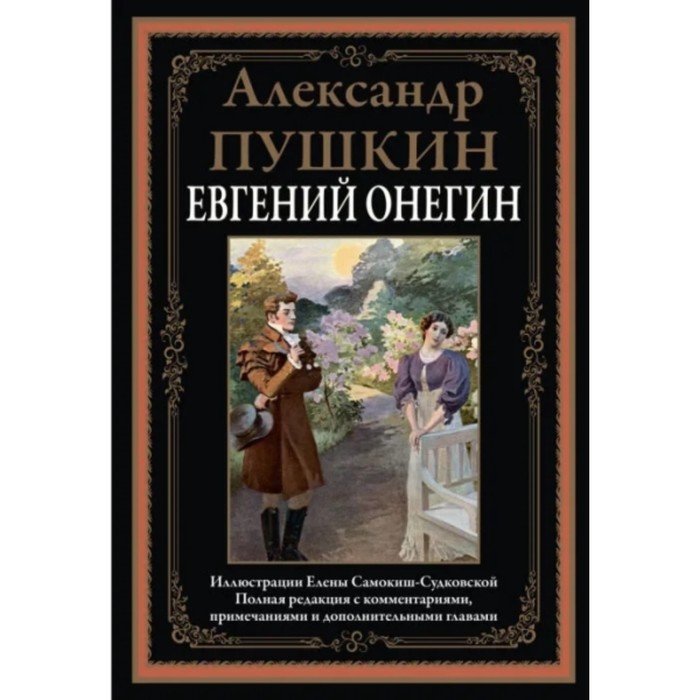
Starting the first chapter of Eugene Onegin, Alexander Sergeyevich Pushkin (1799–1837) and did not suspect that he would create one of his best works. The romance in verses, which was begun without a plan, has begun without a plan, the real encyclopedia of the life of a whole social layer of Russia of the first quarter of the 19th century has turned. In “Onegin”, the breadth of the topics affected by the details of life, the intriguing plot, the depth of description of the characters affects. Features of the life of that era are shown in the novel with unsurpassed skill. A. S. Pushkin wrote “Eugene Onegin” for about seven and a half years (1823–1830) and put his whole soul into it. Such epoch -making work for Goethe was “Faust”, and for Byron - “Pilgrimage of Child Harold” and “Don Juan”. Starting to write “Onegin”, A. S. Pushkin did not count on the publication and worked, as he himself expressed, “through the sleeves”, then reflecting his own life in the next chapter, then making lyrical deviations full of subtle humor or deep elegiac feeling. As a result, a masterpiece was born, with whom every educated Russian is familiar today.
, in addition to the classical text of the novel, there are numerous comments that help to better understand the realities of Russian life at the beginning of the XIX? Article of the famous literary critic of the XIX century. Lev Ivanovich Polivanov about the history of the creation and artistic features of this unique work. At the end of the publication, the options for some stanzas and parts of the novel, which were preserved only in the manuscripts of the poet, as well as “Excerpts from Onegin’s trip”, restored by A.F. Bychkov according to the manuscript notebook of A. S. Pushkin.
The magnificent color illustrations of Elena Petrovna Samokish-Sudkovskaya, nee Benard (1863–1924), which allow you to see both the heroes of the novel and the life surrounding their lives are decorated. Elena Petrovna was born in St. Petersburg in the family of military engineer Peter Petrovich Benard. She studied painting at a Helsingform drawing school and took private lessons from V.P. Vereshchagin. Her works were demonstrated along with the canvases of such masters of painting as I. I. Shishkin and I.E. Repin. The artist devoted a lot of time to book illustrations, posters and posters; I was fond of modern, hence the love of ornamental borders, vignettes, screensavers and endings. In 1883, she married an academician of painting by R. G. Sudkovsky, but after 2 years he died of typhoid; In 1889, she married the artist N. S. Samokish, - hence her double surname. The revolutionary events of 1917 forced E.P. Samokish-Sudkovskaya to move to a relatively calm Vyborg. Later, the artist emigrated to France, died in Paris in 1924
| Characteristics | |
| A country | Russia |
| Artist | Samokish-Sudkovskaya E. |
| Author | Pushkin, Alexander Sergeyevich |
| Kit | No |
| Number of pages | 152 |
| The year of publishing | 2021 |
| Type of cover | Hard cover |
| Type of paper | Crossed |
There are no reviews for this product.