
How to watch and understand paintings
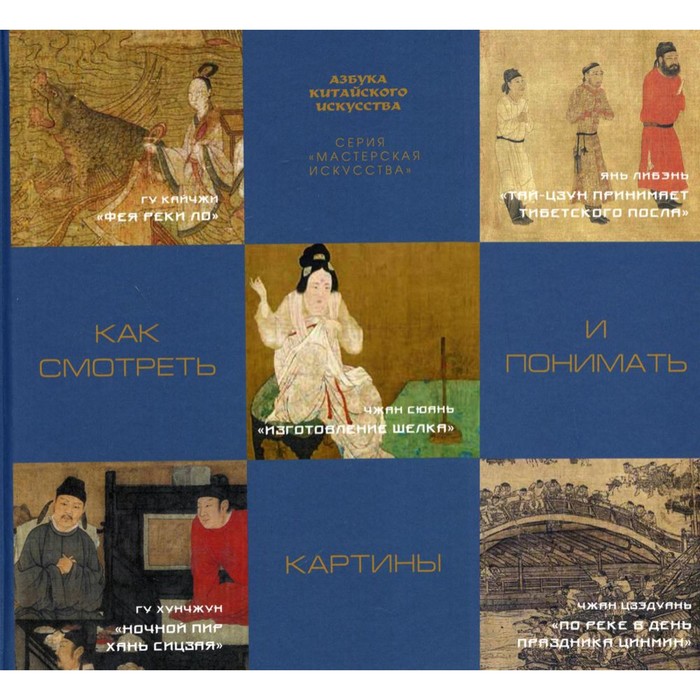
The book tells about the famous works of ancient Chinese painting, explains how to watch and understand paintings, from the time of creation of which we have been separating for more than a thousand years, so their perception is not a simple task at all. The first part is dedicated to one of the most outstanding picturesque scrolls in the history of China entitled "The Fairy of the Luo River." The poem about the love of the poet Tsao Ji (lived at the turn of the II-III centuries) to the beautiful river fairy inspired a myriad of painters. The most famous is the picture of Guychi, created more than 1600 years ago, which has a special mysterious attractiveness. In the Chinese tradition, the prescription of painting is not exhausted by only aesthetic pleasure - it also conveys the events of past eras. The painting “Tai-Szun accepts the Tibetan ambassador” by Yan Libane is an image of the famous emperor Tai-Szun and the well-known history of the establishment of diplomatic relations between the two countries. The description of this picture and work of Yan Libane and other artists of the Tang era (618-907) is presented in the second part of the book. Among the surviving information about various historical eras, the most colorful are the descriptions of the appearance of elegant beauties of the Tan era. What did the women who lived at that time really look? What outfits and jewelry did they wear? This can be found out in the third part from the description of the famous picturesque work “Making silk” of an unsurpassed master of image scenes of court life Zhang Xuan. The painting “The Night Pir Han Sitszai”, recognized as one of the ten greatest works of Chinese painting, is said in a fourth part. The picture depicts a scene of a cheerful feast organized by Han Sissay, an official of the state of the South Tan (X century). The author of this work of Gu Hunjun (910-986) was considered an outstanding artist who knew how to convey the psychological state and spiritual mood of the characters in the smallest details. “On the river on the day of the Cinmin holiday” Zhang Jeduan is the famous picturesque canvas, reflecting the colorful and rich life of Bianjin, which about 900 years ago was the largest city in China, the capital of the North Sun empire (960-1127). It can rightfully be called a kind of encyclopedia, which fully reveals to us the city life of Chinese society of that time. About this picture, a detailed story in the fifth part of the book.
| Characteristics | |
| A country | Russia |
| Age | From 6 years |
| Author | There is no author |
| Editor | Jie Ts. |
| Kit | No |
| Number of pages | 160 |
| The year of publishing | 2021 |
| Type of art | Fine |
| Type of cover | Hard cover |
There are no reviews for this product.