
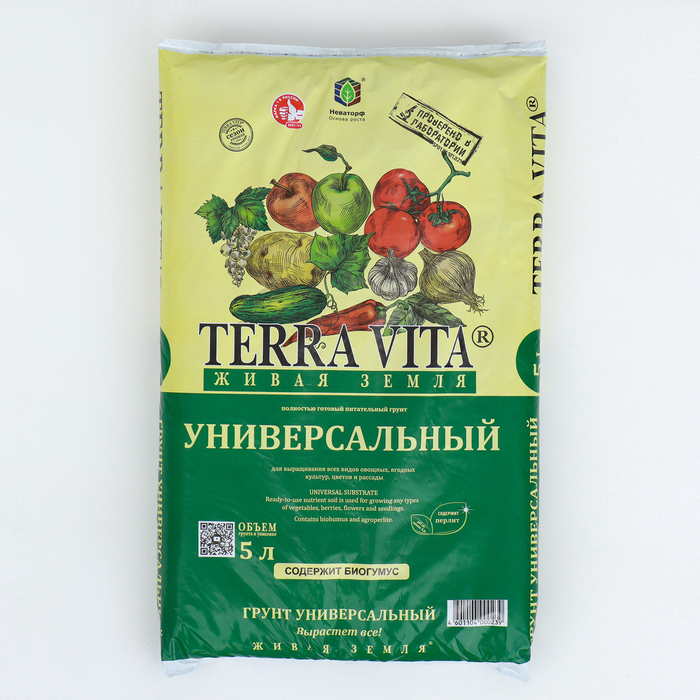
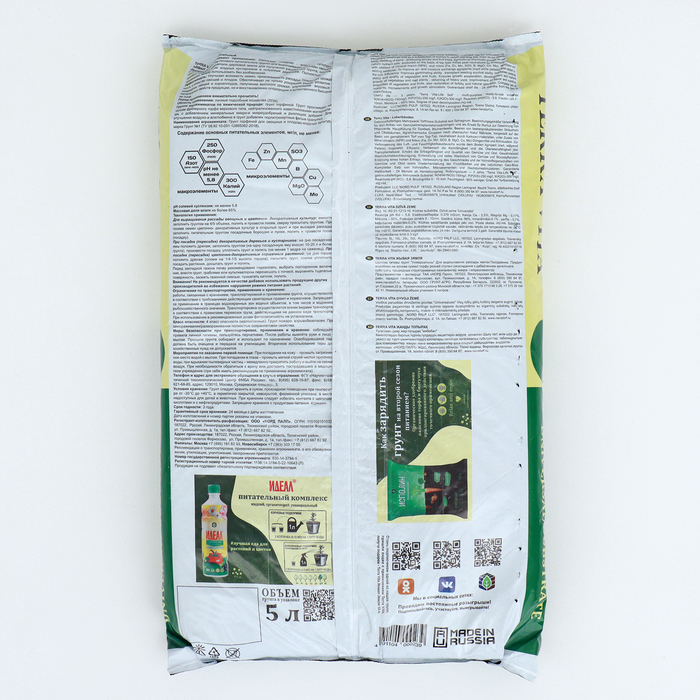
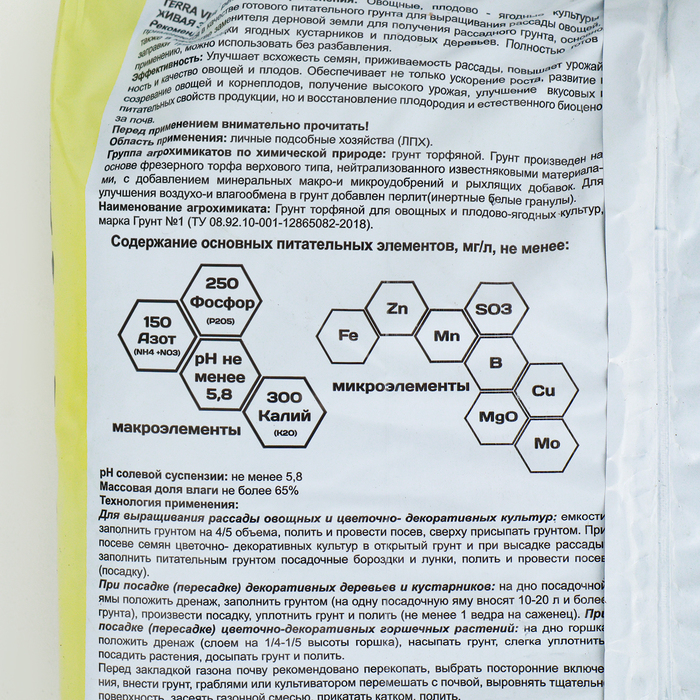
Living land, universal, 5 l




If the rose is sleeping, we store in the refrigerator or basement at a temperature of 0 to +4 ° C, or on the street in a box under a thick layer of snow.
If the rose woke up, put in a greenhouse or land in the garden, providing a shelter. You can put the rose in the pot and store in a cool basement or on the balcony/loggia, shade from direct sunlight. You can also put on the coldest windowsill in the apartment if there is no basement and cold room. After landing in the apartment, put a bag on a rose and make small holes on the sides so that it is wet, but not damp inside.
During storage, periodically check the condition of the planting material. Dead, rotten parts of the roots, remove and treat with fungicide (topaz, phytosporin).
Please remember that transportation and transplant is stress for plants. Before planting in open ground, treat the root system with a growth stimulant (Epin, Circus, NV101, Ferovit).
landing place
Beautiful roses are created for the fact that admiring them, so for planting they choose a place that will be clearly visible from the house, and, at the same time, worthy of the queen of flowers among other plants in the garden. All roses love a lot of light, but if they are in the sun all day, then they quickly bloom. When growing roses in the southern regions in open sunny places, there is a high probability of burns on the petals. It is better if after noon the rose is in partial shade. The health of the rose largely depends on the landing site. For example, ensuring good air circulation will protect the rose from diseases and pests. No need to plant roses in lowlands: cold air stagnates there and plants are more susceptible to diseases.
soil requirements
Roses develop well on fertile, sufficiently breathable soil, light and deep, which provides the roots of the necessary moisture and air. Heavy clay soils must be improved before planting, adding humus, peat, compost, sand to them. Too light sandy soils pass the water like a sieve, low -frozen ones, and strongly hesitate in hot days. To improve them, clay soil with the mandatory addition of humus or peat-naval compost, sod land is added. The most favorable soil reaction is slightly acidic, pH = 5.6-6.5. To acidify into the soil, you can make peat or manure, and use the ash or lime materials to reduce acidity. The root system of the rose goes into the soil deep enough, therefore, in areas with a high level of groundwater, roses are often overdue with black spotting. The permissible depth of groundwater occurs - at least 100 cm.
landing
In the middle lane and more northern regions, roses are launched in the spring, in April-May. If roses are planted near the house, it is necessary to place them in the distance from the base of the wall so that the water flowing from the roof does not wash the roots. For planting, roses dig a hole about 60 cm deep. Drainage (small pebbles, gravel or crushed stone) with a layer of at least 10 cm is laid on the bottom of the pit. Organic fertilizers are applied over the drainage, it can be a rotted manure or compost; The thickness of the layer is not less than 10 cm. Garden ground is poured from above in the form of a dome, also a layer of 10 cm. Before planting, the rose seedlings are placed for a day in a solution of “heteroauxin” - a stimulator of roots growth. With its help, plants are easier to endure the landing and take root faster. Too long and damaged roots should be cut off by a secateur to healthy wood. It is easier to plant a rose with an open root system together: one gardener sets the seedling so that the root neck (place of rose vaccination) is 3 cm below the surface of the earth, the other, straightening the roots, fills them with earth and carefully compacts loose soil around the plant. The root neck should be lower than the surface of the earth after its compaction. Such planting contributes to the growth of additional rose stalks above the vaccination site. After planting, the bush is watered under the root. If the earth has settled a little, it is additionally added. The soil around the seedling is mulched with peat.
Care
Care behind roses consists in systematic loosening of soil, removal of weeds, prevention of diseases, top dressing and pruning.Rose top dressing is seasonally: nitrogen - in the spring, phosphorus and potassium - in the summer.Despite the drought tolerance, watering roses is a mandatory procedure, especially in hot and arid periods.Plants are watered not by cold water from a bush of 15-20 liters of water, in dry and warm weather-twice a week.By the end of the summer, watering is reduced and stops at all with the onset of September.In the first year, to allow early flowering of young plants should not be.Until the beginning of August, the buds of roses from the bushes are removed.In August, 1-2 flowers are left on each shoot and do not cut them, so that the fruits are talted in the fall.The shoots of the rose in this case are better ripening, wintering well and bloom abundantly next year.
pruning
The best time is the best for the full pruning of roses: as soon as the kidneys begin to swell, the pinkovs take up the secateurs. It is important to know what shoots the rose forms the flowers: last year, or shoots of the current year. In addition, it is necessary to decide on the purpose of pruning: to achieve early and abundant flowering of a rose or the formation of a bush. Depending on this, pruning can be strong (short trimming), medium (moderate), weak (long). A strong pruning, in which 2-4 kidneys are left on shoots, are used in the spring after planting seedlings and to rejuvenate old bushes. With an average pruning on the shoots, 5-7 kidneys are left, it contributes to early flowering and provides high decorativeness. Weak pruning is used in the summer to remove faded inflorescences. To one degree or another, pruning of roses is carried out throughout the growing season. In the spring, the ladies from frosts must be removed, the tops of the shoots are cut. Pruning roses in autumn is sanitary in nature: patients, damaged shoots are removed, too overgrown bushes are pulled out. Summer pruning serves as a means of regulating flowering: all fading inflorescences are cut along with the top of the shoot.
shelter for the winter
Roses of Central strip of Russia require protection from frosts. It is not necessary to rush with the shelter of roses for the winter, frosts up to -7 ° C are tolerate well, moreover, they help plants prepare for winter. Covering roses should be with the onset of stable cold weather. Before shelter, the roses are cut, the base of the bush is sprinkled with earth. It is undesirable to hill with peat, sawdust or sand. They are too moisture and with sharp temperature fluctuations can damage the shoots and provoke the penetration of infection. Compost, humus or ordinary garden land will do much better. The roses are covered, as a rule, with a spruce spruce. It is laid between the bushes and on top of the plants. After that, frames are installed over the bushes from greenhouse arches, rails, metal profile or wire. The frame should rise above the plants by 20-30 cm. Warming material is laid on the frame, and a plastic film is pulled on top, leaving side purges. In the spring (in March-April), roses must begin to ventilate, opening the side sides of the frame. It is important to remove the upper film as soon as possible, otherwise the temperature will increase greatly under it, and the kidneys will move to growth ahead of time. And since the roots have not yet work in frozen ground, there may be a drying of the aboveground part of the plant. Under the non -woven material, roses remain for some time, getting used to the sun. In Siberia, roses winter quite well due to the presence of a powerful snow cover. In general, the process of covering roses for the winter in Siberia is the same as in the middle lane, the main thing is to correctly determine the time of shelter: do not rush so that the plants do not bend, and not be late so as not to freeze.
Propagation
To preserve the varietal signs of roses, only vegetatively propagate. At home, the easiest option is the propagation of a rose with cuttings. Cuttings are taken from grown and stronger bushes after the first wave of flowering.
Use in landscape design
For a beautiful rose in the garden there is always a place, even if its area is completely small. A rose can form a flower garden, decorate a mixbord, looks great in solitary and group plantings against the backdrop of an emerald lawn, hedges of roses are magnificent. The rose will be appropriate in any landscape style, whether it be a classic French or English landscape, rural country or exquisite modern. The variety of species and colors makes it possible to use roses in the garden in a variety of ways. These flowers are able to change beyond recognition the most inconspicuous piece of earth.
| Characteristics | |
| A country | Russia |
| Application area | For all species of plants and cultures |
| Weight, kg/volume, l | 5 |
There are no reviews for this product.