
Magnesium B6, 30 tablets


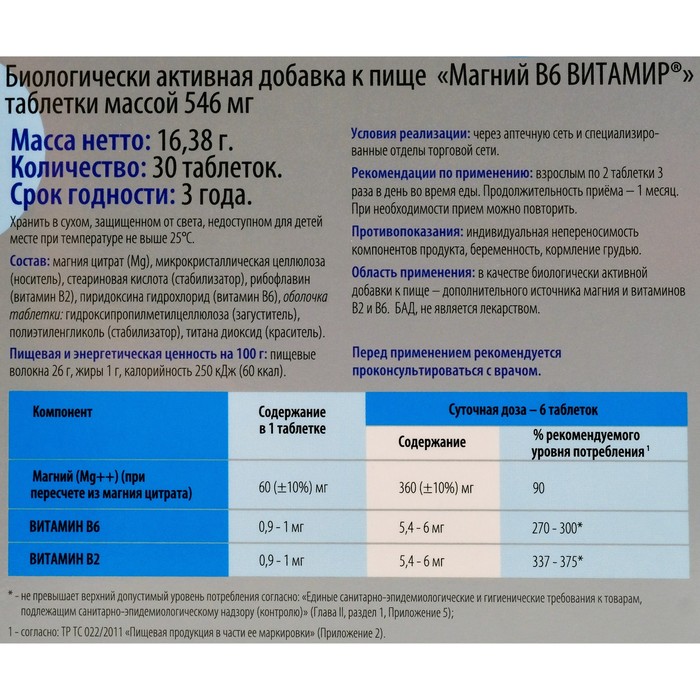

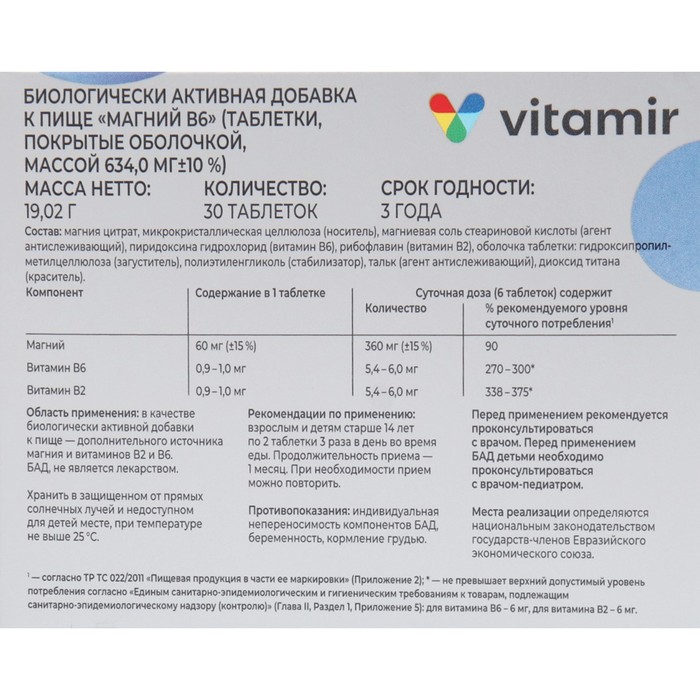



Magnesium is a vital element that is necessary for the normal functioning of cells, is involved in most metabolic reactions. In particular, he is involved in the regulation of the transmission of nerve impulses and in muscle contraction. 1/3 of the amount of magnesium contained in the body accumulates in bone tissue. The body receives magnesium along with food. The lack of magnesium in the body can be observed in violation of the diet (diet) or with an increase in the need for magnesium.
Pyridoxine (vitamin B6) is involved in many metabolic processes, helps to improve the absorption of magnesium from the gastrointestinal tract and its penetration into the cells.
Magnesium levels in serum
- between 12 and 17 mg/l (1 - 1.4 meek/l or 0.5 - 0.7 mmol/l): indicate a moderate deficiency of magnesium;
- below 12 mg/l (1 meek/l or 0.5 mmol/l): indicate a severe magnesium deficiency.
Pharmacokinetics
Gastrointestinal absorption of magnesium salts occurs partially by a passive mechanism in which salt solubility plays a decisive role. The degree of this absorption does not exceed 50%. The excretion occurs mainly by the kidneys.
Indications
The established magnesium deficiency, isolated or associated with other scarce conditions, accompanied by such symptoms as:
- increased irritability.
- Minor sleep disturbances.
- gastrointestinal cramps. Fatigue.
- muscle pain and cramps.
- The sensation of tingling in the muscles.
If a decrease in these symptoms is missing after treatment, the continuation of treatment is inappropriate.
Contraindications
- Increased sensitivity to any of the components of the drug.
- severe renal failure (creatinine clearance less than 30 ml/min).
- phenylketonuria.
- Age up to 6 years (efficiency and safety are not established).
- hereditary galactocurrency, glucose and galactose malformation or lactase deficiency (due to the presence of lactose).
- simultaneous intake Levodopa.
with caution: moderate renal failure (danger of developing hypermagnesia).
During pregnancy, the drug is taken only on the recommendation of a doctor.
Taking into account that magnesium penetrates into breast milk, if necessary, taking the drug, it is recommended to stop breastfeeding.
Special instructions
tablets are designed only for adults and children over 6 years old. With moderate renal failure, the drug should be taken with caution due to the risk of developing hypermagnesia. With the simultaneous deficiency of calcium and magnesium, the deficiency of magnesium should be replenished to additional calcium.
When using pyridoxine in high dose for a long time (for several months or in some cases - years), sensory neuropathy may develop, which is accompanied by symptoms such as numbness and vestibular disorders, the tremor of distal limbs and the gradually developing sensory ataxia (violations of coordination of movements). These disorders are usually reversible and pass after the abolition of high doses of vitamin B.
composition (in 1 tablet), covered with a film shell, contains: magnesium citrate 618.43 mg, pyridoxine hydrochloride 10 mg.
Acomatic substances: lactose, macrogol-6000, magnesium stearat, gipromellose 5mpa. S, titanium dioxide (E 171), talc.
Method of application and dose
tablets should be taken entirely, drinking a glass of water.
adults: 3-4 tablets per day, divided into 2-3 doses, during food.
children over the age of 6 years (weighing about 20 kg): 10-30 mg/kg/day (04-1.2 mmol/kg/day), that is, 2-4 tablets per day, divided into 2- 3 tricks, during eating.
Usually the duration of treatment is 1 month.
| Characteristics | |
| A country | Russia |
| A group of vitamins | Vitamins b |
| Action | Improving the brain |
| Appointment | For the nervous system |
| In the package, pcs. | 30 |
| Indications | Increased nervous excitability |
| Microelements | Mg (magnesium) |
| The form of release | Pills |
There are no reviews for this product.