
Multi B-complex vitamir for the nervous system, hair and nails, 30 tablets
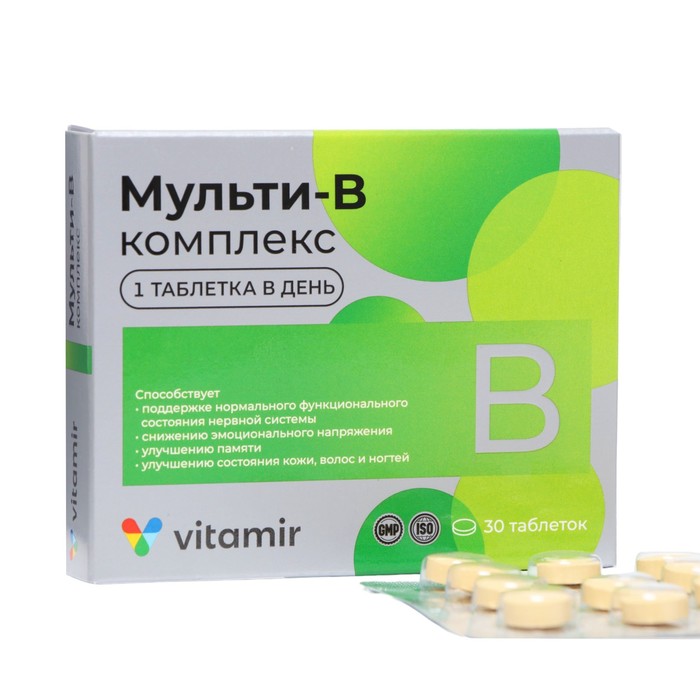


B vitamins are extremely important for maintaining normal life and performance. Vitamins for women. They participate in cellular metabolism, the functioning of the nervous, digestive, cardiovascular systems, and are responsible for energy metabolism. Each of them has its own biological significance, while all of them are closely interconnected, therefore it is recommended to use them in the complex. All vitamins of this group are water -soluble and do not accumulate in the body, as a result of which their supply must be constantly replenished.
unbalanced nutrition, special preferences in the diet (for example, vegetarianism/veganism), diseases of the gastrointestinal tract - these and other factors can cause a deficiency of vitamins of group B.
Information on biologically active substances and their properties:
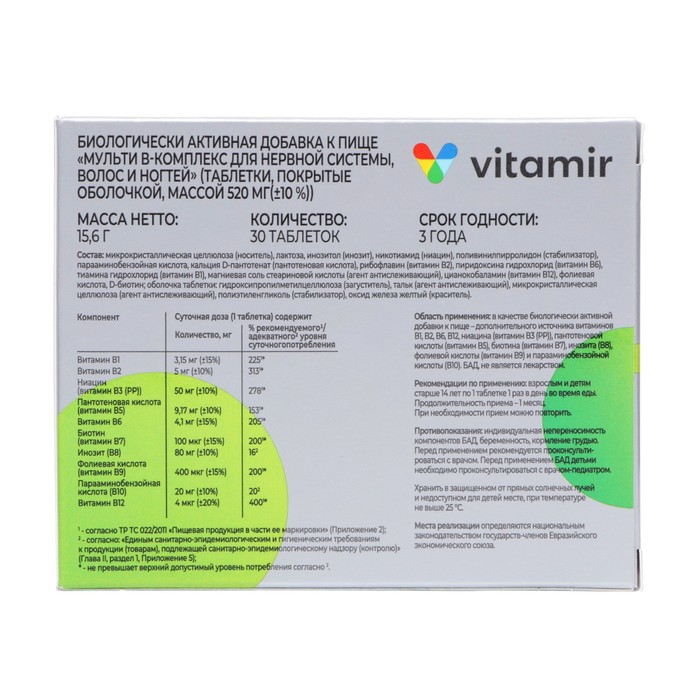
Tiamine hydrochloride (vitamin B1), located in the membranes of nerve cells, affects the processes of restoration of nerve cells, regulates the conduct of signals along nerve fibers, and also participates in ensuring energy processes in nerve cells.
Riboflavin (vitamin B2) is necessary for tissue regeneration, preserving the normal structure and functions of the mucous membranes. Vitamin B2 is required to ensure cellular respiration, maintain visual function.
Nicotinamide (vitamin B3 or PP) helps to improve blood circulation, including in hair roots, which ensures hair nutrition.
Kholina Bartratrate (Vitamin B4) is the predecessor of many key compounds of the body. For example, acetylcholine - one of the main intermediaries in the transmission of information in the nervous system. Moreover, the action of vitamin B4 is enhanced in combination with inosite. Vitamin B4 is part of the main phospholipide - lecithin, which is the most important component of the cell membranes of the body. In addition, vitamin B4 has a lipotropic effect, contributing to the transport and exchange of fats in the liver, protecting its cells.
Calcium D-pantotenate (vitamin B5) as a component of coherent A, plays a key role in metabolism and is therefore necessary to maintain the vital activity of all cells. Vitamin B5 and its derivatives have a protective effect on nerve cells, help improve attention and memory.
Pyridoxine hydrochloride (vitamin B6) is involved in the metabolism of nervous tissue proteins. Vitamin B6 has an antioxidant effect. Together with vitamins B3 and B2, he is involved in the production of energy in the body, stimulates the synthesis of hemoglobin in red blood cells.
Biotin (vitamin B7) stimulates the work of genes and enzymes responsible for the absorption of blood glucose in tissues. It also supports the normal functioning of the sweat glands, nervous tissue, male seed glands, skin cells.
Inosite (vitamin B8) is involved in the metabolism of nervous tissue. The physiological role of Inosite partly resembles choline (vitamin B4). It is also part of cell membranes. Under the influence of hormones and mediators, membrane phospholipids release derivatives of vitamin B8. One of these derivatives, inositutitrifosphate, performs the function of an intermediary of information transmission in cells.
Folic acid (vitamin B9) is necessary for the normal ripening of all rapidly dividing cells. Participates in the synthesis of amino acids (including glycine), in the exchange of vitamin B4. Vitamin B9 provides the synthesis of myelin (protective membrane of nerve cells), is involved in many reactions of the restoration of nerve fibers.
Paraminobenzoic acid (vitamin B10) is part of the molecule of folic acid. Since vitamin B10 has the ability to activate tyrosinase - a key enzyme for biosynthesis of skin melanins, it is necessary for normal hair and skin pigmentation. Vitamin B10 is involved in the metabolism of proteins and hematopoiesis.
Cyanocobalamin (vitamin B12) affects cell membranes and is involved in biochemical processes that provide the normal synthesis of myelin. Vitamin B12 translates folic acid into its active shape. Vitamin B12 (cyanocobalamin) takes an active part in the processes of energy supply of cells. It is synthesized only by microorganisms and is completely absent in plant foods. Vitamin B12 promotes tissue regeneration, the functioning of the nervous system, a decrease in cholesterol.
Method of application: adults 1 tablet 1 time per day during meals. The duration of the reception is 1 month. If necessary, the reception can be repeated.
| Characteristics | |
| A country | Russia |
| A group of vitamins | Vitamins b |
| Action | General strengthening |
| Indications | Hair growth and nail strengthening |
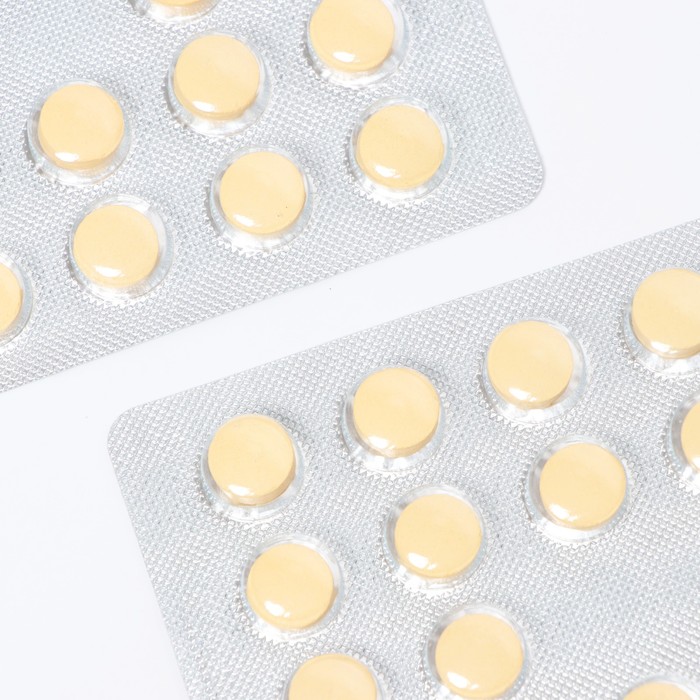
| The form of release | Pills |
There are no reviews for this product.