
Playing beads. Journey to the East
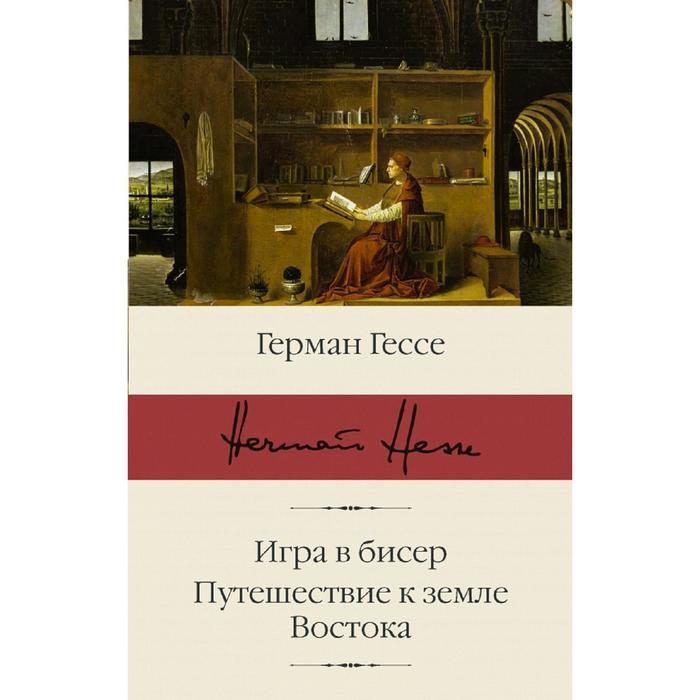
Throughout the whole creative path, Hesse was thinking about the fate of the world, art and civilization. The writer began working on his main novel “Game of Beads” a couple of years before the Nazis came to power, published it in 1943-the turning point of the Second World War, and in 1946 received the Nobel Prize for him. In this, according to the definition of Thomas Mann, the “joyful-taic book”, written in the atmosphere of universal militarization and barbarism, Hesse asks the main question-how to save a personality and spiritual principle during the collapse of culture and a general decline in morality?
Without trying to portray the realities of a world catastrophe, he proposed his way - to escape from society, the departure to the world of “pure art” and the search for “eternal truth”, in the beautiful fictional country of Castalia, where the intellectual elite of the future selflessly indulges in the game in beads.
Due to the complexity of the construction, plexus of many genre forms, wealth of symbols, terms and concepts from various fields of culture, the novel was not understood and accepted by everyone, but immediately gave rise to acute discussions and became a spiritual guideline for whole generations around the world.
The publication also includes the allegorical story “Journey to the East of the East”.
| Characteristics | |
| A country | Russia |
| Age | From 16 years old |
| Author | Hesse Herman |
| Kit | No |
| Number of pages | 608 |
| Pages format | 125 х 200 |
| The year of publishing | 2021 |
| Type of cover | Hard cover |
| Type of paper | Typographic 84/60 |
There are no reviews for this product.