
Prelude, or the formation of the poet's consciousness. Wordsworth U.
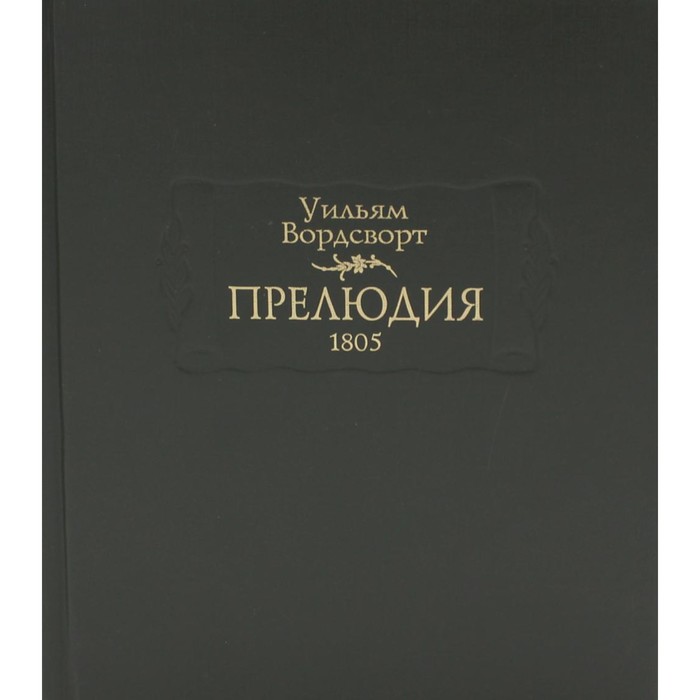
William Wordsworth (1770-1850), the largest figure of English romanticism, the representative of the Lake School, at sunset of years (1843-1850) held the post of poet-laureate under Queen Victoria. In England, the first half of the XIX century. They call the "era of Wordsworth."
the central work of his work, the poem "Prelude, or the formation of the poet's consciousness", is known as the best English "Biography of the Soul" of the romantic artist. Wordsworth is considered one of the ancestors of romantic eco -critics, and its reflection in the “prelude” and “The Stream of the Mind”) anticipate “The Stream of Consciousness” by modernists. Starting from the second half of the 19th century, the references to the “prelude” were used by almost all English -language writers and poets who worked in the genre of autobiography. The poem understood the quotes with more than one generation of readers.
Wordsworth composed "Prelude" for five decades, creating several options. For this publication, the editorial office of 1805 was chosen, because it is she who crowns the period of the creative heyday of Wordsworth, its so -called golden decade. The fabric of the narrative in the “prelude” has a complex drawing: it is shown as in England at the end of the 18th - early 19th centuries. The spirit of time and mentality changed. Against this background, a person of an artistic warehouse of thinking takes place, which sensitively perceives modern events. Wordsworth indicates what philosophical models dominated at one stage or another of his growing up.
“imagination” for Wordsworth is a special term. This creative power is “feeling intellect”, which allows the hero to feel more acutely - both his own and other people. “I have a story about this ability for so long,” says Wordsworth and makes the term “imagination” in the title of two books of the poem. The moments when the outbreaks of “imagination” occur, the poet calls “places of time” (“Spots of Time” - the term -logical innovation of Wordsworth; the concept anticipates the “epiphany” of James Joyce). Wordsworth believed that the “places of time” could be of different intensities: some bright, others more turned. The intensity depends on the stage of personal development of a person. In the poem "Prelude" there are more than thirty episodes with a description of "places of time." They make up the backbone of the poem.
Wordsworth as the author of lyrical ballads, “Singer of Tisa and Narcissus”, is well known in Russia. However, to understand the Wordsworth as a poet who foresaw the development of new aspects of the psychology of creativity and who searched for it at the junction with age -related psychology and with the history of intellectual culture, only by studying the “prelude.” The poems “Prelude, or the formation of the poet’s consciousness” in Russian. It was performed by Tatyana Stamova specifically for the series "Literary Monuments". For the section of the “additions”, “Oda of Association of Immortality” (G.M. Kruzhkov), “Grazmir, my house” (M.V. Falikman), “Destroyed hut” (A.V. Lukyanov) and others were translated into Russian. The publication is accompanied by articles by A.N. Gorbunova and E.V. Haltrin-Khalturina. In the design of the book, illustrations from the publications of Wordsworth of the 19th century
were used in the design of the book.| Characteristics | |
| A country | Russia |
| Author | Wordsworth William |
| Number of pages | 1000 |
| The year of publishing | 2017 |
| Type of cover | Hard cover |
There are no reviews for this product.