
Seeds "chill" plasmasis


Watermelon "Khilok"
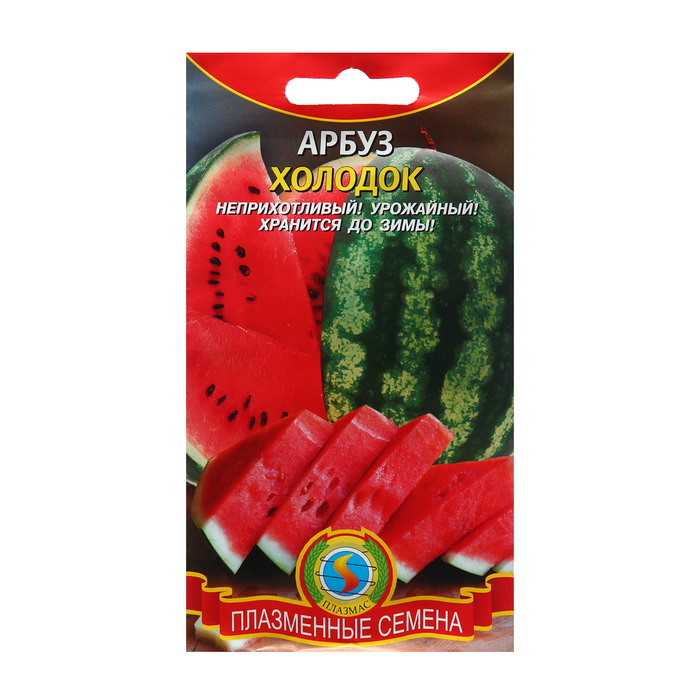
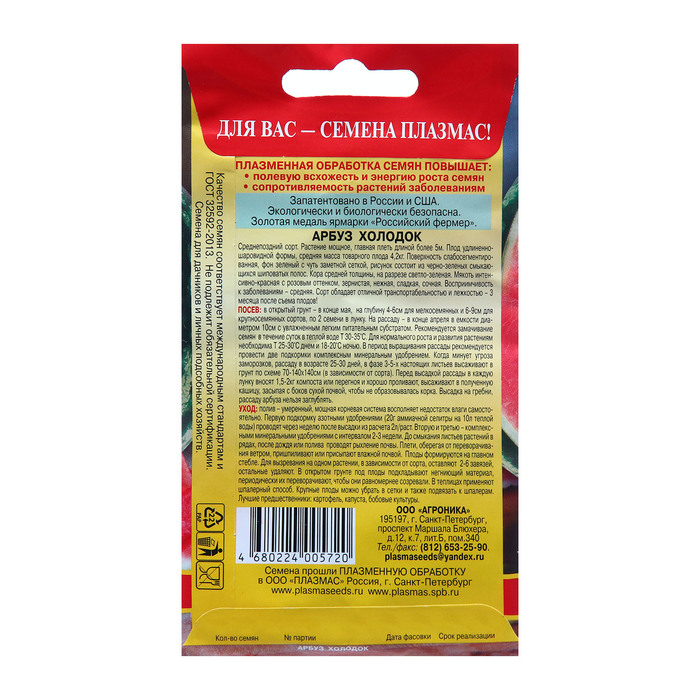
Medium -lasting variety. The plant is powerful, the main whip is more than 5m. The fruit is elongated, spherical, the average mass of the commodity fruit is 4.2 kg. The surface is weak-generated, green background with a slightly noticeable mesh, the pattern consists of black-green closing stud stripes. The bark of medium thickness, in the context of light green. The pulp is intense red with a pink tint, granular, delicate, sweet, juicy. Susceptibility to diseases is average.
The variety has excellent transportability and lecture - 3 months after removing the fruits!
Sowing:
to the open ground at the end of May, to the depths, to the depths 4-6cm for small-seeded and 6-9cm for large varieties, 2 seeds per hole. For seedlings at the end of April in a container with a diameter of 10cm with a moisturized light nutrient substrate. It is recommended to soak seeds during the day in warm water T 30-35 ° C. For normal growth and development, plants need T 25-30 ° C during the day and 18-20 ° C at night. During the period of growing seedlings, it is recommended to carry out two top dressing with complex mineral fertilizer. When the threat of frost passes, seedlings aged 25-30 days, in the phase of 3-5 of these leaves are planted in the ground according to the scheme of 70-140x140cm (depending on the variety). Before planting seedlings, 1.5-2kg of compost or humus is added to each hole and shed well in the resulting gruel, pouring dry soil from the sides so that the crust does not form. The planting on the crests, the seedlings of the watermelon cannot be deepened.
Care:
Watering a moderate, powerful root system fills the lack of moisture on its own. The first top dressing with nitrogen fertilizers (20 g of ammonium nitrate per 10 liters of warm water) is carried out a week after landing at the rate of 2l/plant. The second and third complex mineral fertilizers with an interval of 2-3 weeks. Prior to the closing of plant leaves in the rows, after rain or watering, soil loosening is carried out. The lashes, protecting from turning the wind, are pinned or sprinkled with wet soil. Fruits are formed on the main stem. For ripening on one plant, depending on the variety, 2-6 ovaries are left, the rest are removed. In open ground, non -wagging material is placed under the fruits, they are periodically turned over so that they mature more uniformly. In greenhouses, a trellis method is used. Large fruits can be removed in nets and also tied to trellises. The best predecessors: potatoes, cabbage, legumes.
| Characteristics | |
| A country | Russia |
| Agronomic expiration date, years | 7 |
| Ampelous | Yes |
| Color | Green |
| Curly (vines) | No |
| Do they need stratification | No |
| Features of growing | Universal |
| Ripening dates | Late |
| Sowing for seedlings | April |
| Sowing in the ground | May |
| The color of the fetal pulp | Red |
| Variety | Chill |
There are no reviews for this product.