
The assault aircraft of the USSR (1941 -1956). Rustenin O.V.
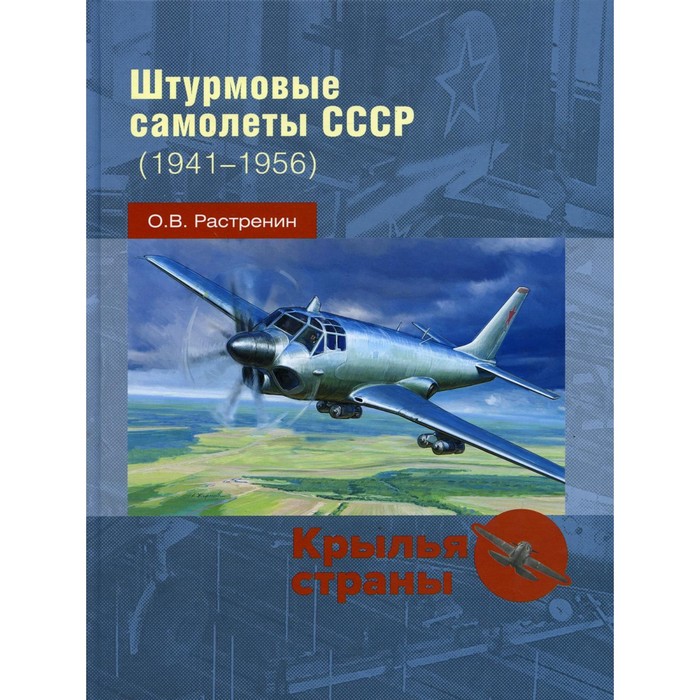
The book describes the history of the development of an assault type aircraft in the Soviet Union, the development of projects and the construction of experimental and serial machines of this type from the beginning of the Great Patriotic War to 1956, when assault aircraft were liquidated in the Air Force structure.
A description of the development and improvement of IL-2 aircraft during the war years. A detailed analysis of the combat use and efficiency of IL-2 is carried out, and the compliance of flight-combat qualities is evaluated by the real conditions of the war.
shows that the experimental Su-6 attack aircraft combined high speed, maneuverability, security and power of the weapon and in combat efficiency by 1.6-2.5 times exceeded all the attack aircraft of the IL family (IL-2 , Il-8, il-10). However, the Air Force was adopted by the IL-10 attack aircraft. The reasons for this decision are analyzed.
In the post-war period, instead of creating a large-range barrazing attack aircraft with a TV-2 turboprop engine (S.A. Lavochkina project), as the Air Force was proposed, on the initiative of Ilyushin and, with the support of the Ministry of Aviation Industry, they built an IL-40 armored attack aircraft 40 With two AM-9 turbojet engines. The plane turned out to be high-speed, but had very limited combat capabilities (flight range, runways, combat load, aiming complex).
In the development of the layout of the stormtrooper of Lavochkin (engine TV-2 behind the armored cabin of the crew) in the OKB A.N. Tupoleva developed and built an armored dive bomber Tu-91 with TV-2F. This aircraft successfully passed state tests and fully met the Air Force requirements to the aircraft of direct support for the troops of that time. However, the plane did not receive further development. It is shown that the Tu-91 was about 2-2.5 times better than the combat efficiency of the IL-40 aircraft.
The reasons for the abolition of the Air Force Aviation Air Force and the termination of work on the implementation of the IL-40 attack aircraft are given and analyzed.
It is concluded that since the USSR did not conduct serious studies of the issues of combat effectiveness of aircraft for various purposes, the choice of the “correct” direction of development of assault aircraft was an intractable task for that time and did not have an unambiguous, obvious solution. When in 1956 in Vevi them. NOT. Zhukovsky developed the first version of the calculated probability model to carry out a combat mission by the aircraft, assault aircraft in the structure of the Air Force was already abolished. As a result, the model of combat effectiveness of the assault aircraft was not developed. Instead, a probabilistic approach to assessing the combat efficiency of aircraft was extended to fighter-bombardment aircraft.
The book most fully sets out the history of projects and prototypes of multi-purpose and assault aircraft, such as Sam-14Sh, LT, Pegasus, Pe-2 Akab, Tu-2Sh, T-Zbis, ITP, TIS, Su-6, Su-8, IL-6, MS, Il-8, Il-10, Il-Yum, Il-16, Il-20, Sh-218, SU-14, IL-40, Tu-91.
In terms of the quantity and volume of the material collected, this work has no precedent. The text is illustrated by a large number (over 750 units) photos, schemes and sketches, including unique, published for the first time.
The book is intended for all the history of domestic aviation that are interested in, will be useful to developers of aviation equipment, military specialists.
| Characteristics | |
| A country | Russia |
| Age | From 16 years old |
| Author | Ragenin Oleg Valentinovich |
| Number of pages | 456 |
| The year of publishing | 2021 |
| Type of cover | Hard cover |
There are no reviews for this product.