
The Pali verb system (verb forms and their values in diachrony). Paribok A.V.
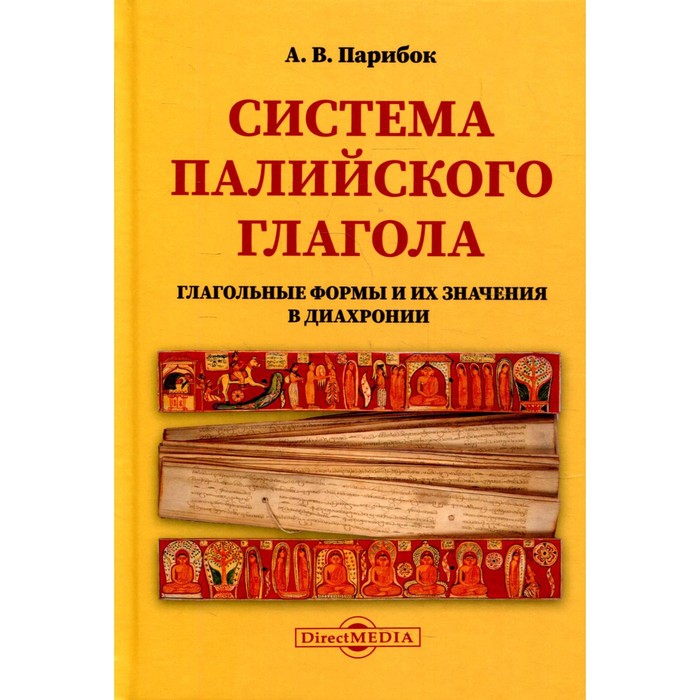
The linguistic monograph “The Pali Verb system” sequentially describes all the grammatical meanings characteristic of the verb. -the language of the South Theravadin version of the Buddhist canon of Ttitrataka (recorded in writing about 2000 years ago), later voluminous comments and other literature of Sri Lanka and Indochina countries up to the first half of the 20th century. This original study is performed on the painting material of several thousand pages of texts. The focus of attention is analytical innovations in the verb system. The morphology of the verb word that has long been described in the specialized literature is stated in the book in total, only mainly for the best accessibility to the reader of very numerous examples. The presentation is built on the principle of "from the meaning to form." In terminology, the author as a whole follows the St. Petersburg (Leningrad) grammatical school. The concept of an analytical word form is introduced. The chapters of the book consistently describe the following verb categories: representation, causative, pledge, type and time, inclination, image of the action. The novelty of the book is significant. For the first time in the language, it was described: a verb form is described, which makes up a single category crossed with grammatical time. Two moods were discovered- supposed and most supposedly, both with a continuation in modern Indo-Aryan languages. The distinction between the final and non -predicate, which has parallels in Dravidian languages, has been introduced. The communion of the subjunctive mood was found. Complex constructions are described, which have received great development in modern Indo -Aryan languages. The category of causativeness is thoroughly examined. In the language, the second causative appears in it for the first time, which became later characteristic of Indo -Aryan languages. This category is important for thinking native speakers of this language. In the collection category, the lexicalization of some Sanskrit forms of the finite liability was noted. In the appendix, a table of verb superkemems, compiled by a simple verb and causatives, is given. The work is designed for linguists, budologists and learning language fell.
| Characteristics | |
| A country | Russia |
| Age | From 16 years old |
| Author | Paribok Andrey Vsevolodovich |
| Form of scientific literature | Reviews |
| Kit | No |
| Number of pages | 180 |
| The subject of the book | Humanitarian sciences |
| The year of publishing | 2022 |
| Type of cover | Hard cover |
There are no reviews for this product.