
The technique of "empty stool" as a mechanism of change. Psychotherapeutic dialogs in clinical practice. Kellogg S.
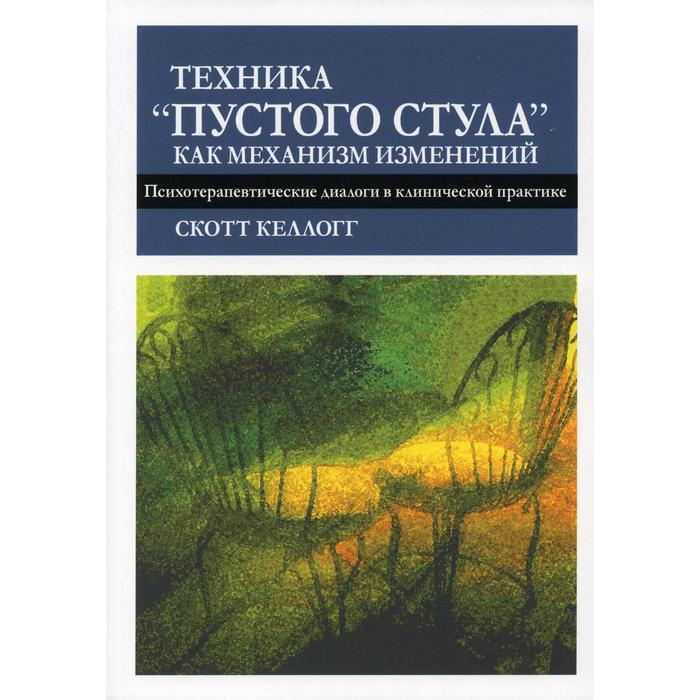
The book considers the method of “empty stool” and a practical guide for its use to solve a variety of clinical problems. The technique of “empty stool”, created by Dr. Jacob Moreno in the 1950s and modified by Dr. Fritz Perls in the 1960s, relies on a rich creative heritage, combining art and science, and is widely used by representatives of different directions of psychological counseling. The book introduces clinicians to the main methods of dialogue and contains examples of therapeutic confrontation and staging. Interventions using the technique of “empty stool” are implemented in dialogs, during which the client personifies the problem (with others or with himself) and thus tries to solve it. Dialogue with others helps the client to cope with grief and loss, heal from interpersonal violence and injuries, manage complex relationships, as well as develop their assertiveness. Dialogues are aimed at resolving internal conflicts, to combat the negative impact of internal criticism and self -hatred, allow you to work out dreams and nightmares, expand the boundaries of the self through working with polarities. In this book: • Scenarios and examples of dialogues in the technique of “empty stool” • The technique of “empty stool” in the fight against dependencies • Assistance in social conflicts, medical problems and psychoses • Improving communication skills and the development of their asserticity • Strategy for opposing internal criticism and negativity • Strengthening methods to bring clarity and existential involvement
| Characteristics | |
| A country | Russia |
| Age | From 16 years old |
| Author | KELLOLGG Scott |
| Kit | No |
| Number of pages | 272 |
| The year of publishing | 2021 |
| Type of cover | Soft binding |
| View | General psychology |
There are no reviews for this product.