
What is the tiger growling about? How animals communicate in the wild. Jason Bittel
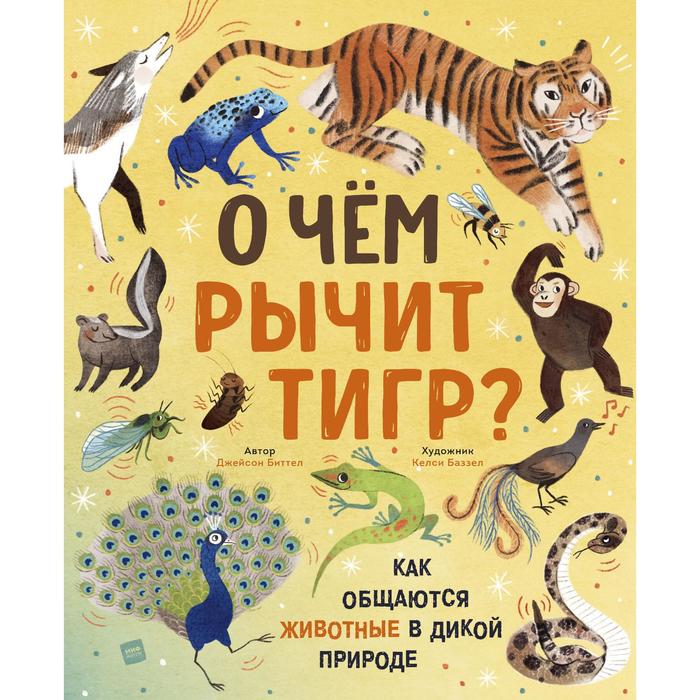


What did the dog crash? What are the sparrows tweeting about? Why is the peacock shaking its tail? Children's questions can be at a dead end even the most knowledgeable and patient adults.
Jason Bittel is a famous journalist regularly cooperating with National Geographic, The Washington Post, Popular Science, New Scientist Magazine, and the author of the monthly children's column in The Washington Post. Exhausted by the questions of his own children, he decided to give answers in the book.
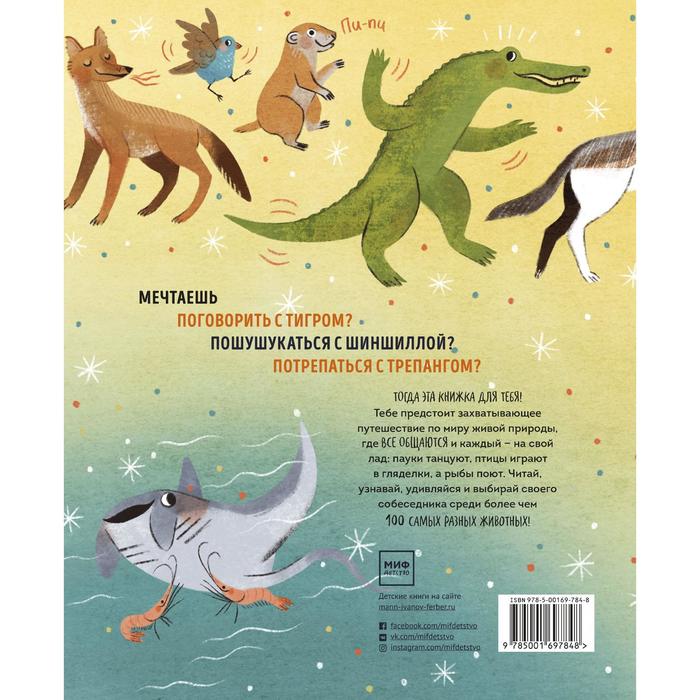
Poses, sounds, movements, smells - under the cover you will find a story about how many animals transmit information. The book has a hundred heroes: from the dancing flamingos to sneezing deer and current eels. And even more amazing facts about them.
The book is easily, clearly and with humor explains the communication of animals. It will be equally interesting to read it to both children and their parents. And the illustrations of Kelsey Bazzel - at the same time realistic and characteristic - will make reading attractive for small fidgets.
for whom this book:
For parents of preschool children who want to interest the child with the world around.
for primary school teachers and biology.
For educators of kindergartens and teachers of additional children's education.
from the author:
Today you will utter about 7,000 words - like most people on Earth. I have no doubt that you have a palate for this. For example, you will ask you to transfer milk at breakfast. Or say hello to a neighbor's dog. Or maybe leaving the house, tell mom that you love her, or let a friend write off homework on a break. It seems?
Animal words do not have as many people in stock as ours. But they also have something to talk about: they get food, report danger, scare or support each other.
Animals are very different and they live in different places. And therefore, they communicate with each other in different ways. Sometimes it may seem strange to us, even funny: for example, fish to warn about danger, they fart. But this is a scientific fact!
And they do all this for the sake of one thing: survival! And not only a particular animal, but also its entire large family-a biological species.
how to read the book:
You can start with any turn or choose an animal that you want to know about today. First, consider the pictures, then discover amazing facts. After that, you can look for a video on the topic and even play: try to communicate like a flamingo or a tiger. What did the dog crash? What are the sparrows tweeting about? Why is the peacock shaking its tail? Children's questions can be at a dead end even the most knowledgeable and patient adults.
Jason Bittel is a famous journalist regularly cooperating with National Geographic, The Washington Post, Popular Science, New Scientist Magazine, and the author of the monthly children's column in The Washington Post. Exhausted by the questions of his own children, he decided to give answers in the book.
Poses, sounds, movements, smells - under the cover you will find a story about how many animals transmit information. The book has a hundred heroes: from the dancing flamingos to sneezing deer and current eels. And even more amazing facts about them.
The book is easily, clearly and with humor explains the communication of animals. It will be equally interesting to read it to both children and their parents. And the illustrations of Kelsey Bazzel - at the same time realistic and characteristic - will make reading attractive for small fidgets.
for whom this book:
For parents of preschool children who want to interest the child with the world around.
for primary school teachers and biology.
For educators of kindergartens and teachers of additional children's education.
from the author:
Today you will utter about 7,000 words - like most people on Earth. I have no doubt that you have a palate for this. For example, you will ask you to transfer milk at breakfast. Or say hello to a neighbor's dog. Or maybe leaving the house, tell mom that you love her, or let a friend write off homework on a break. It seems?
Animal words do not have as many people in stock as ours. But they also have something to talk about: they get food, report danger, scare or support each other.
Animals are very different and they live in different places. And therefore, they communicate with each other in different ways. Sometimes it may seem strange to us, even funny: for example, fish to warn about danger, they fart. But this is a scientific fact!
And they do all this for the sake of one thing: survival! And not only a particular animal, but also its entire large family-a biological species.
how to read the book:
You can start with any turn or choose an animal that you want to know about today. First, consider the pictures, then discover amazing facts. After that, you can look for a video on the topic and even play: try to communicate like a flamingo or a tiger.
| Characteristics | |
| A country | Russia |
| Age | From 6 years |
| Artist | Bazzel K. |
| Author | Bittel Jason |
| Number of pages | 64 |
| The theme of the encyclopedia | Animal world |
| The year of publishing | 2021 |
| Translator | Tsilinsky V. |
| Type of cover | Hard cover |
There are no reviews for this product.