
White grid seeds 20 g
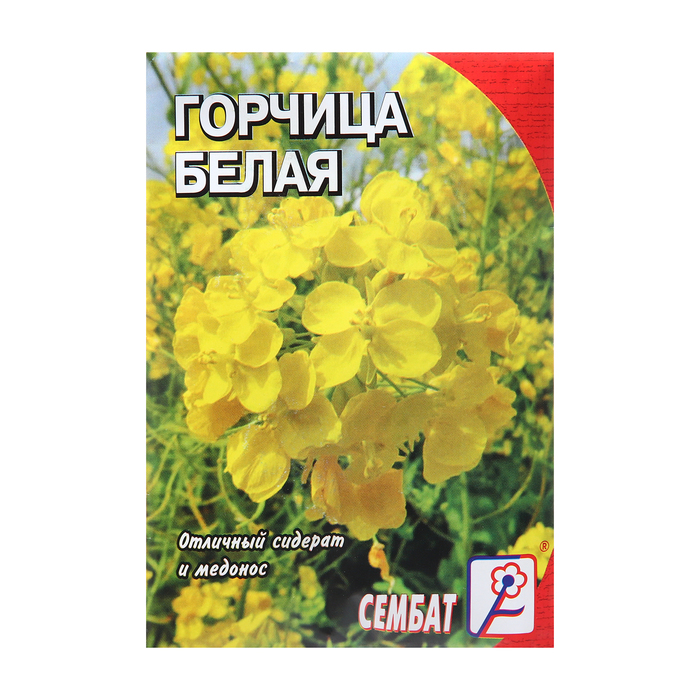


The type of annual herbaceous plants. The height of the plant is 25-100 cm. The stems are hard, hairy, sometimes almost naked, erect, branched at the top. The lower leaves of the lyre-peristaret, the upper blade is wide-oval, consisting of three shares, the side blades-2-3 pairs; the upper leaves on shorter petioles, with a smaller number of blades and with their more acute outlines; Less commonly, the lower leaves are dissected into narrow shares; All stiff -haired, less often - almost naked. The flowers are pale yellow or white, collected in a multi-flowered (25-100 flowers) cystic inflorescence; Funas are 1½ times shorter than bending. The pedunks of the fetus are horizontally rejected, less often ascending, 0.8-1.3 cm long. The plant is insect -pushed. Mustard blooms in June - July. Fruits ripen in August.
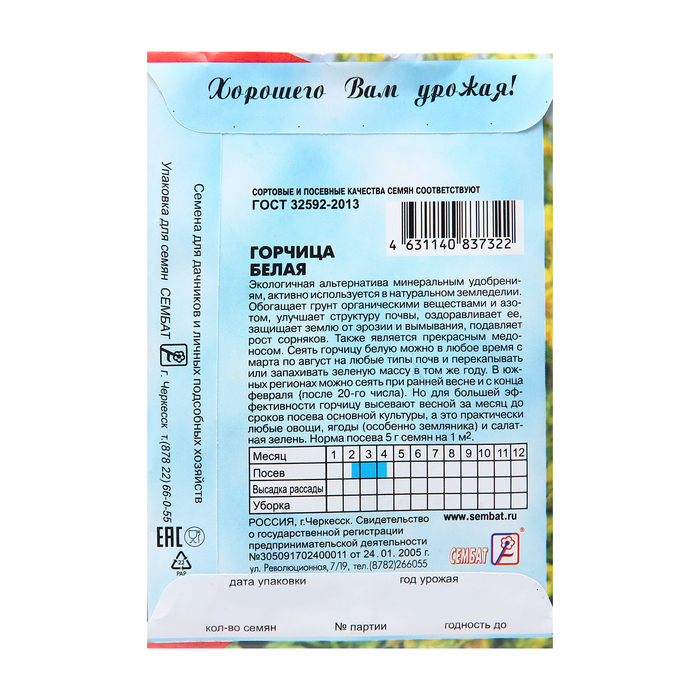
Propagation occurs using seeds. Mustard is not executive to the soil and more cold -resistant than the saptic, but less drought -resistant. The sprouts of yellow mustard can easily tolerate frosts up to -6 ° C, and germinate at a temperature of 1-2 ° C. The yellow mustard is one of the most important honey plants. In young form, mustard can be used as livestock food, but this is a separate sowing that is removed still green. Also, the yellow mustard is used to deoxidize and improve the soil in the form of green fertilizer (the biomass is crushed and buried). Suppresses the growth and development of weeds, cleanses the soil of pathogens of diseases of agricultural crops. However, the yellow mustard itself can be a harmful field weed.
mustard powder is used as a means of protection against pests of the garden and garden.
| Characteristics | |
| A country | Russia |
| Agronomic expiration date, years | 3 |
| Features of growing | Open soil |
| Ripening dates | Average |
| Sowing for seedlings | January |
| Sowing in the ground | May |
There are no reviews for this product.