
XX century. Working on the past. Practices of transitional justice and memory policy in former dictatorships. 2nd edition, fixed. Lezina E.
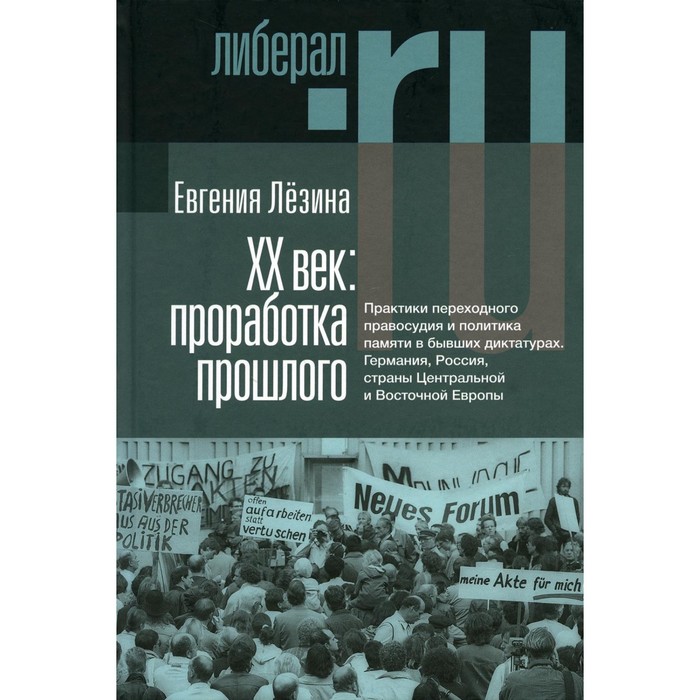
There are rare moments when, as the Germans say, Stunde Null, zero hour - the time when history can begin to start again in the civilization process. In the XX century, such a time occurred more than once with the collapse of the seemingly unshakable dictatorships. So, the opportunity to start with a clean sheet appeared in Germany in 1945; The countries of the social camp in 1989 and further-among the republics of the Soviet Union, including Russia, in 1990-1991. However, in different countries, a decline in repressive modes has led to very different results.
Why are there some attempts to draw a line under the totalitarian past and restore the supremacy of the right to be successful, while others did not? What social and legal institutions and procedures became the key to success? How did the specifics of the historical, cultural, social context affect the trajectory of the development of society? And why is the “unprofitable” past back today, especially in Russia, in the form of a political reaction?
the answers to these questions are looking for in his study by Evgeny Lesin - a political scientist, a researcher at the Center for Modern History in Potsdam.
| Characteristics | |
| A country | Russia |
| Author | Lezina Eugene |
| Number of pages | 584 |
| The year of publishing | 2023 |
| Type of cover | Hard cover |
There are no reviews for this product.