
Pyramid "Account"
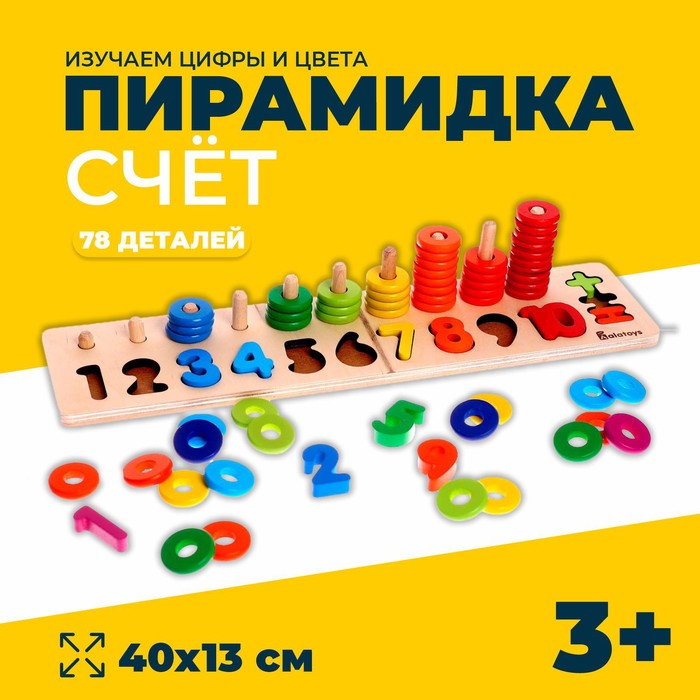
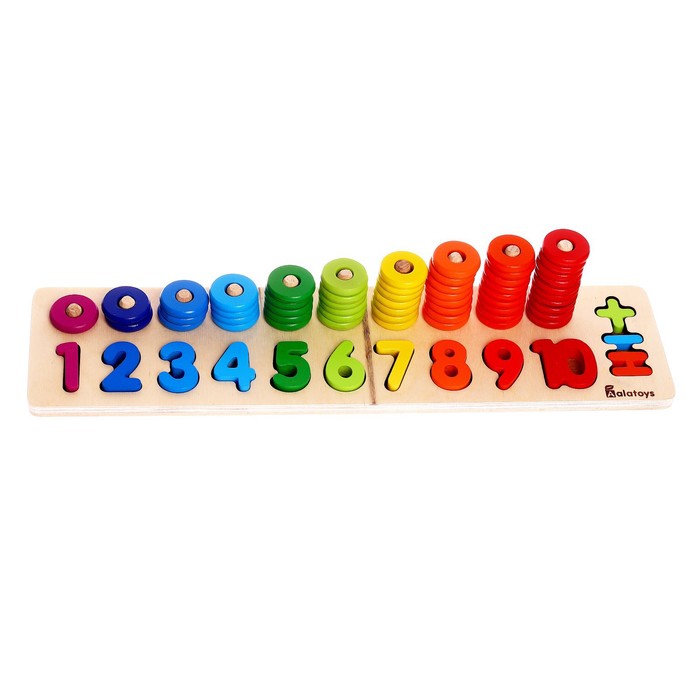

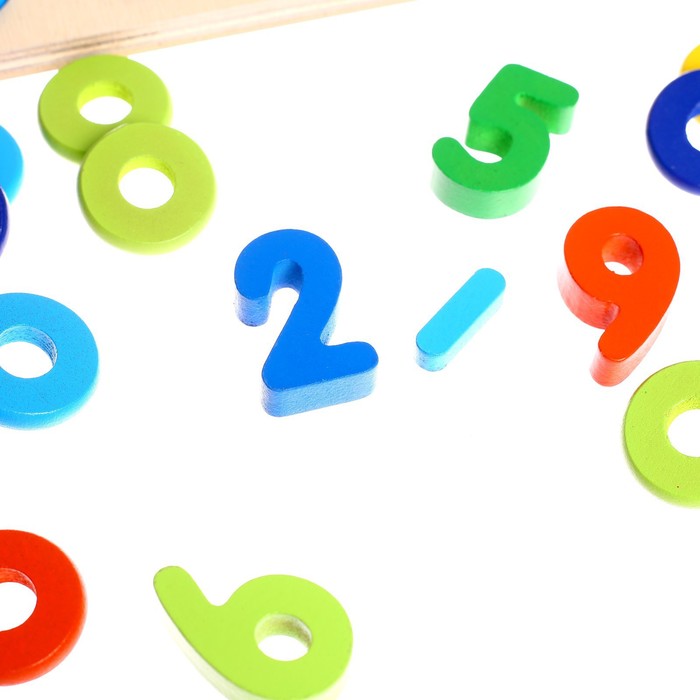


Pyramid "Account" is a multifunctional developing toy. She will be an excellent assistant for the child in the study of flowers, numbers and teaching account skills. When playing, the baby trains memory, attention, thinking, fine motor skills and speech. Suitable for both younger and older preschool children.
The game “Decompose the numbers into houses”Purpose: to teach to correlate the silhouette of the numbers with its figure, the development of visual-motor coordination, consolidating the name of numbers, colors, training a direct and opposite account.
The course of the game: invite the child to lay out the numbers in their places. Then name the numbers with the baby in the direct and reverse order. You can also name the colors of each number.
The game “Spread sticks in height”Purpose: development of visual attention, eye.
The course of the game: ask the child to put the sticks on the base in an increase in the order (from the lowest to the highest stick). If the child is difficult, you can first lay them out on the table, and then put them on the stand.
The game “Pick up the Rings”Purpose: to learn to correlate and distinguish between colors, count and correlate the amount with the figure, memorizing the visual image of numbers, the development of visual attention.
The course of the game: show the child how to string rings on sticks. Explain that you need to find rings of the same color as the figure. Putting all the rings of a certain color on one stick, calculate their number with the child and name the figure corresponding to this amount.
The game “First - then”Purpose: development of auditory memory, consolidation of the image of numbers (colors) and their names.
The course of the game: name the child three digits that need to be laid out in a certain order. For example: Put first 3, then 5, then 8. The child remembers the sequence, laid out the numbers and calls it.
The game “What has gone?”Purpose: development of visual memory, fixing the image of numbers (colors) and their names.
The course of the game: What is the child of three numbers that need to be laid out in a certain order and remember them. Then ask the child to close your eyes, at this time, remove one digit. Opening his eyes, the child calls what numbers did not.
The game “Learn the composition of the number”Purpose: to study the composition of numbers within 10.
The course of the game: Put any number on the base. Put all the rings on one of the sticks, ask the child how many rings are here. Then ask to shift one ring to the next wand and name how many rings on one stick, how much on the other and their amount. Continue to lay out the rings and name their number on each stick until all the rings are on the next stick. Repeat with other numbers.
The game “Learning to count”Purpose: will learn to compose and solve simple examples.
The course of the game: What is the child's example. For example: 1 + 2. The child spreads and solves. To do this, he is helped by rings that he laid out next to the numbers. Also decide examples for subtraction. 4 - 2. In this case, the child will remove excess rings.
The game "Find the silhouette"Purpose: the development of graphomotor skills, consolidating the image of numbers.
The course of the game: circle several digits on a sheet of paper so that they are located not on one straight line, but in different planes, then ask the child to find suitable numbers and put them on a silhouette.
Another version of the game: circle several digits on a sheet of paper so that some of them are located mirror, that is, wrong. The child’s task will find incorrectly written numbers, cross them out, and write (circle) next to him correctly.
The number of details is 78 pcs.
Recommended age - 3 years.
Material - plywood, birch, LHDF, MDF.
Dimensions (B × W × D) - 400 × 130 × 20 mm.
| Characteristics | |
| A country | Russia |
| Age | From 3 years |
| Amount of elements | 68 |
| Material | Tree |
| Type of pyramid | Logical |
There are no reviews for this product.
Tags: Pyramids (toys), pyramids (children's goods), pyramids (children's goods), pyramids (children's goods)