
Seed peas "green corner", sowing, 1 kg
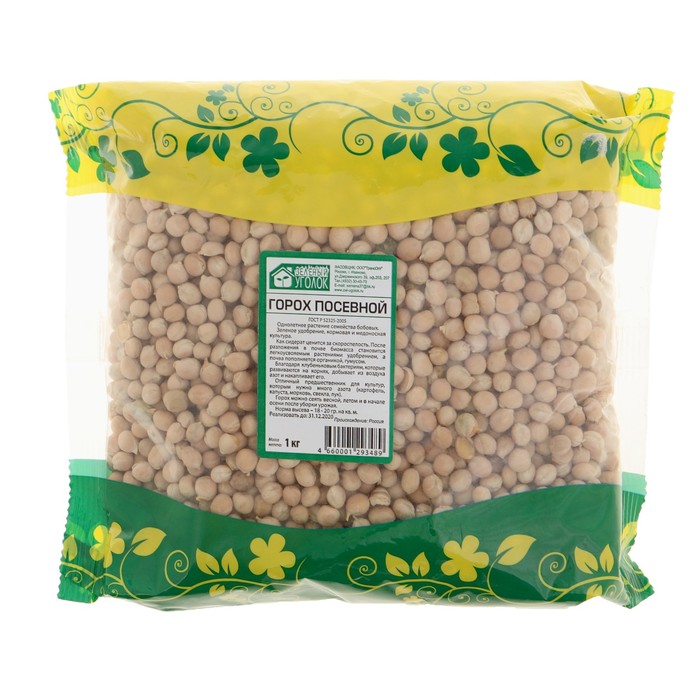
Sowing peas - a one -year -old plant of the bean family. The most famous and common type of peas.
rod root, deeply leaving for the soil. In vertical provisions, the tendrons of leaves clinging to the supports are held. In terms of the height of the stem of the pea varieties, it is divided into tall (115-250 cm), medium-sized (70-115 cm) and low-growing (less than 70 cm). Fruits-beans 3-15 cm long, straight, less often curved, almost cylindrical. Each bean contains 3-10 rather large seeds. Fruiting at the end of July - August.
peas is actively used as a siderat. As a representative of the Beaver family, it allows you to accumulate a lot of nitrogen in the soil. In the roots of peas, colonies of nodule bacteria settled, allowing to generate nitrogen in large quantities. Peas are often planted with potatoes, since potatoes require nitrogen top dressing.
peas - a self -pollinator. Pollination occurs in unwritten buds. Sometimes in hot, dry weather, cross -pollination is possible. The seeds include sugar, fat, starch, vitamins B1, B2, B6, C, PP and K, Carotin, proteins with a set of amino acids (protein in peas is greater than in meat), fiber, minerals (potassium, phosphorus, magnesium calcium, iodine, sodium, iron).
Eating peas raw, boiled or soaked in flour, improves nutrition of brain cells, and therefore brain activity and memory, improves metabolism, treats atherosclerosis And it can serve for its prevention, helps with headaches.
, conditioning seeds are used for sowing. Sowing norms - 1.2 million pcs. Remarking seeds per 1 ha. The sowing norm of sowing, taking into account the mass of 1000 seeds and their sowing fitness is 305.2 kg/ha.
| Characteristics | |
| A country | Russia |
| Agronomic expiration date, years | 2 |
| Weight, kg | 1 |
There are no reviews for this product.