
Set of busts "rulers"
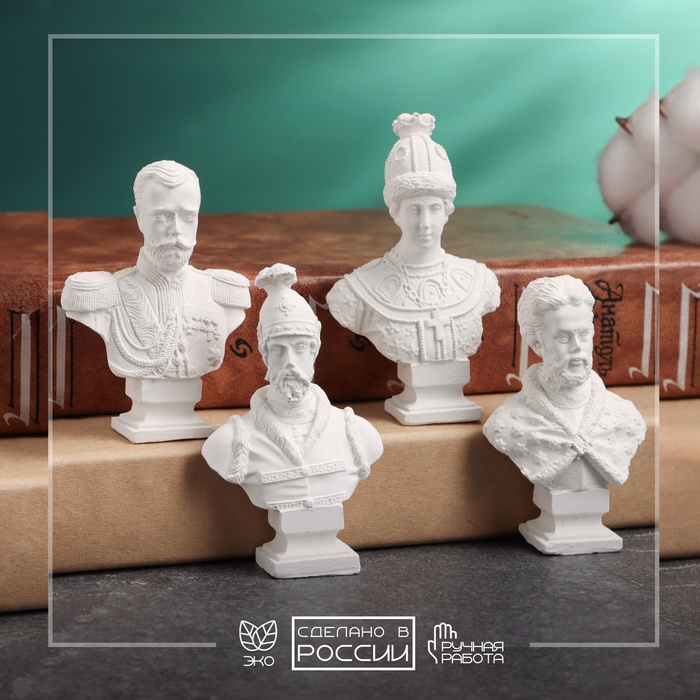
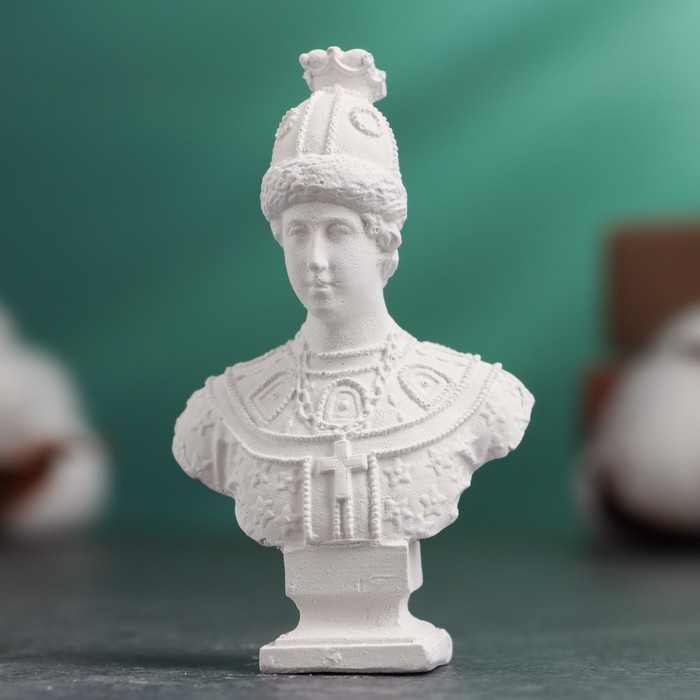


Bust "Tsar Fedor Alekseevich"
Fedor III Alekseevich 1661-1682, sovereign, king and great prince of all Rus' since 1676, from the Romanov dynasty, son of Tsar Alexei Mikhailovich and Queen Maria Ilyinichny
The new king was only fifteen, but it was with him that the foundations of many future reforms of his younger brother Peter were laid.
One of the accumulates was the order of the new king with his courtiers about the change of familiar clothing on the caftans of the European model. In addition, the courtiers began to shave beards and learn the Polish language, which was at that time as a source of knowledge about European culture.
The general census of the population was underway with it, direct courtyard taxation was introduced, which increased the severity of taxes. The ideas of more large -scale transformations were also born. One of the achievements of Fedor Alekseevich was the reform of the administrative apparatus - related orders were combined. Another important milestone was the overwhelming reorganization of the army. Tsar Fyodor decided to gradually replace the noble militia with a regular army - regiments of a foreign system.
Probably, the most important achievement of Fedor Alekseevich was the abolition of localism - custom, according to which the receipt of certain posts and posts necessarily correlated with the merits of the ancestors and the antiquity of the family itself in 1682.
In 1681, he helped in the opening of the printing school of the Zaikonospassky monastery, which became the predecessor of the famous Slavic-Greek-Latin Academy.
Under him, the Russian state fought with the Ottoman Empire and its vassal Crimean Khanate. The Russo-Turkish war ended with the signing of the Bakhchisarai peace treaty, according to which the Left Bank Ukraine and Kyiv remained with the Russian state, and the Turks and Crimeans pledged not to speak out against Russia for twenty years.
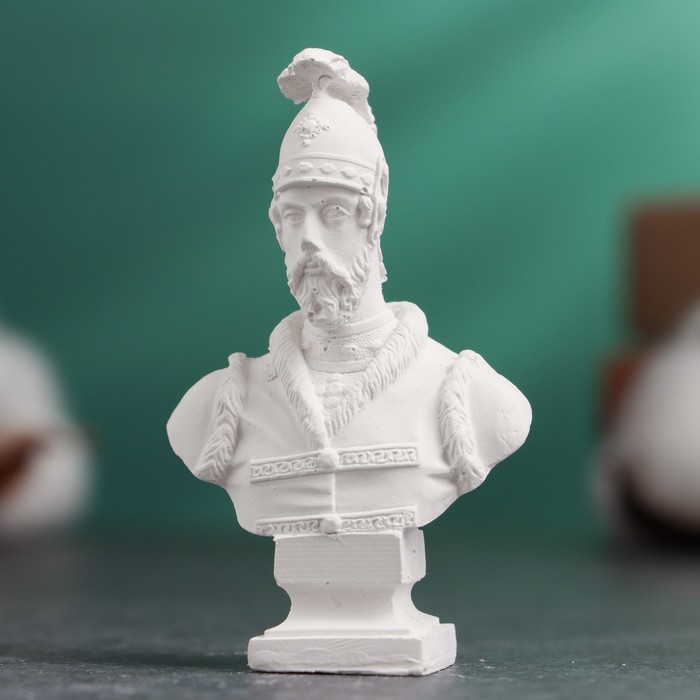
Bust "Tsar Mikhail Fedorovich"
Mikhail Fedorovich 1596-1645, the first Russian king from the Romanov dynasty. Rules since 1613, was elected to the reign of the Zemstvo Cathedral
Mikhail Fedorovich led not a very active foreign policy. I tried not to get involved in large military campaigns. His efforts were aimed at raising the economy and ordering of finances. Elected people from Russian cities who informed the government about the state of land and proposed ways of improving their situation were convened.
During the reign of Mikhail Romanov, 12 Zemsky cathedrals passed, which largely facilitated the work of the government. The country was analyzed by a military service class and a new cadastre began. Under Mikhail Fedorovich, the country became more open to foreigners. The invitation of foreign scientists, the correction of church books began to be practiced. The first government school is being created in Moscow.
Mikhail Fedorovich Romanov, the founder of the dynasty, died on July 13, 1645, leaving three daughters and son Alexei Mikhailovich, who changed him on the throne.
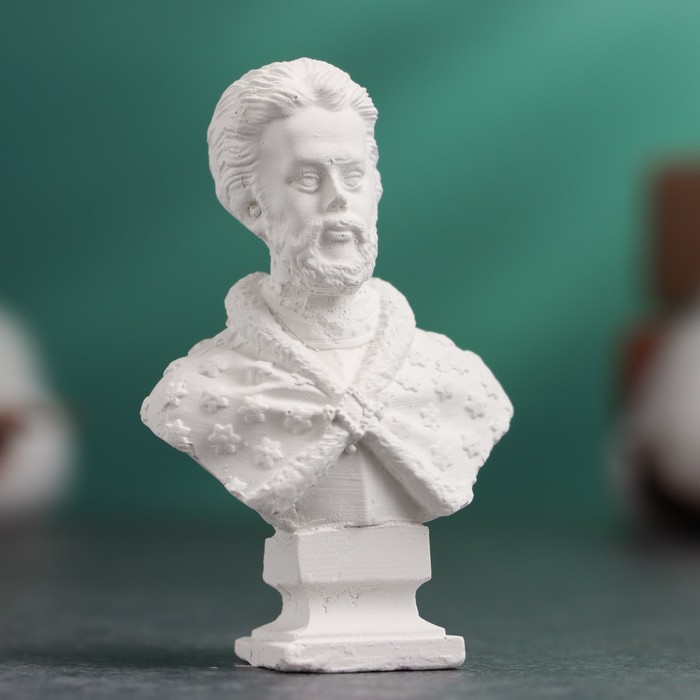
Bust "Tsar John V"
Joann (Ivan) V Alekseevich (August 27 [September 6] 1666, Moscow - January 29 [February 8] 1696, Moscow) - Russian Tsar since 1682 from the Romanov dynasty, son of Tsar Alexei Mikhailovich Tishay and Queen Maria Ilyinichny Miloslavskaya.
Ivan received a crown after the death of the older brother, Tsar Fedor III Alekseevich, being considered the co -ruler of the impatient brother Peter I, but his sister Sofya Alekseevna was the actual ruler in 1682-1689. After the removal of Peter I Sophia from power, Ivan continued to be considered a formal co -ruler of his brother until his death.
Ivan was the father of Empress Anna Ioannovna, the grandfather of Anna Leopoldovna, the ruler with her son Ivan VI Antonovich.
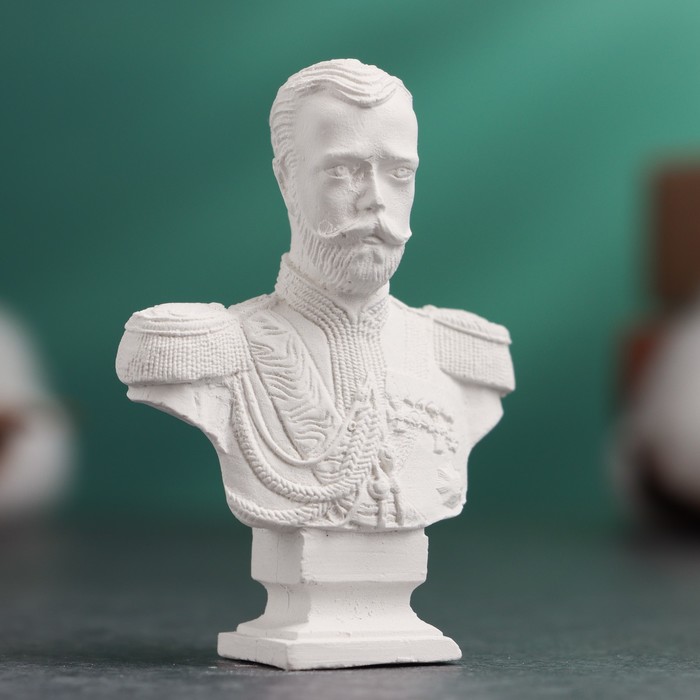
Bust "Nicholas II"Nikolai II Aleksandrovich 1868-1918. - The last Emperor of the All -Russian from 1894 to 1917, from the Imperial House of the Romanovs.
The reign of Nikolai Alexandrovich began with a monstrous tragedy on the Khodynsky field on the occasion of the coronation of the emperor. As a result of the crush, more than a thousand people died, several hundred received injuries. In connection with these events, the people called Nikolai Bloody.
The time of the reign of Nicholas II was a period of the highest rates of economic growth in the history of Russia. Russia has become the main exporter of agricultural products, the first "Ginel of Europe".
According to the manifesto on October 17, 1905, the population of Russia received the right to inviolability of the individual, freedom of speech, press, meetings, and unions. Political parties grew in the country, thousands of periodicals were published. The parliament - the State Duma was elected free will. Russia became a legal state - the judiciary was practically separated from the executive.
The emperor attached great importance to the development of railways. Even in his youth, he participated in laying the famous Siberian road.
In the era of the reign of Nicholas II, monetary reform was carried out, the gold standard of the ruble was established, industry developed violently. Nevertheless, the defeat in the Russian-Japanese war of 1904-1905, as well as revolutionary movements led to the fall of the authority of the emperor. During the participation of Russia in the First World War, economic and political difficulties began to increase in the country. This led to the fact that on March 2, 1917, Nicholas II renounced the throne.
Already in the summer, by decision of the Provisional Government of Nicholas II, together with the family, he was sent to the link to Tobolsk. In the spring of next year, the Bolsheviks moved the royal family and all close associates to Yekaterinburg, where in July 1918, in the basement of Ipatiev’s house, they shot.
| Characteristics | |
| A country | Russia |
| Coating | Without cover |
| Color | White |
| Height, see | 7 |
| Kind of activity | Political figure |
| Material | Gypsum |
| Personality | Ivan v |
There are no reviews for this product.