
Tower "Figures"
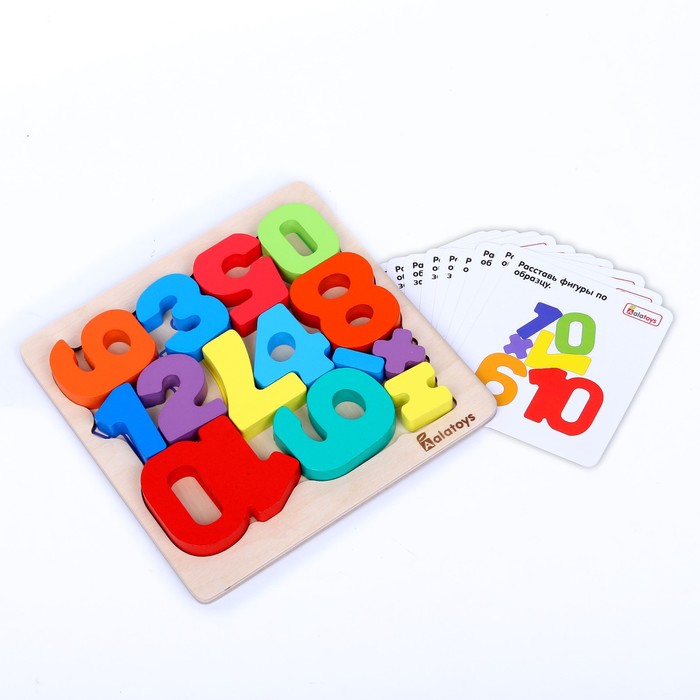
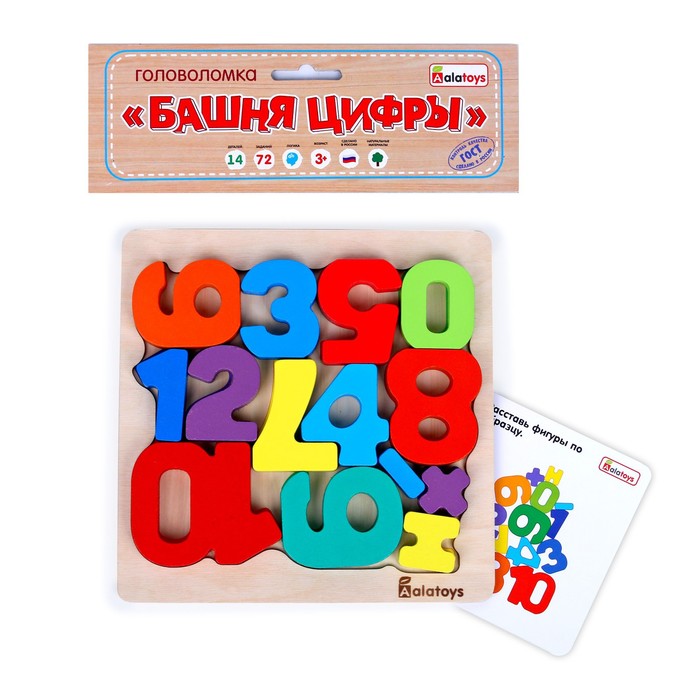


Put all the numbers from the wooden base-sorcerer. Ask the child to lay out all the numbers and signs back so that each is in its place. Then put out the numbers again and invite the child to lay out the numbers by naming. (For example: find and put the number 5). Ask the child what color he put. So, the child consolidates the name and image of numbers, the name of colors, and also learns to correlate voluminous details with their flat image, developing visual-motor coordination and attention.
invite the child to build numbers in a row. First from smaller to larger (0 ؓ –10), then from larger to smaller (10-0). The child spreads the numbers and calls them. If the child is difficult to lay out the sequence of numbers, pay attention to the size of the figures. The larger the figure, the greater the figure. We complicate: lay out the numbers through one, both in the direct and in the reverse order. If this is difficult for the child, after compiling a full row of numbers, ask to remove every second digit from the row. Then two rows will turn out: even numbers. The child pronounces the numbers in each row. So he learns to build a sequence of numbers in the direct and reverse order, divide the numbers into even and odd, call them.
figures of numbers can be used to stroke on a sheet of paper. After receiving the contour image, the digit can be shown to the child options for strokes (straight, wavy, zigzag lines, points...). Also, the child can paint the figure with color. So he trains graphomotor skills, prepares a hand for a letter, fixes the images of numbers.
ask the child to put in a series the numbers according to the instructions (for example: first 1, then 4, then 8). The child spreads and calls the numbers. Then ask the child to close your eyes, at this time, remove one digit. Opening his eyes, the child says what figure did not become (for example: there was no number 4). Put the number in place. Next, ask the child to close his eyes again, at this time change two numbers. Opening his eyes, the child says what numbers have changed places, and puts them back. Gradually complicate, increasing the number of figures. In the process of such tasks, the child develops visual and auditory memory, and the names of numbers are also fixed.
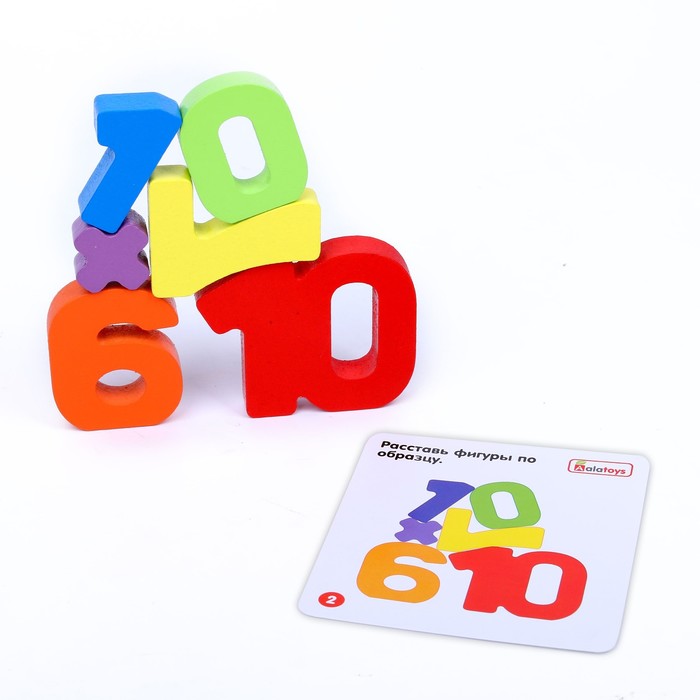
Use cards 1–8. Looking at the card, the child puts numbers and signs on each other, preserving the sequence of figures and holding the balance. You can also come up with how to build figures in the tower, focusing on a sense of balance and tactile perception of figures. If it is difficult for a child to build figures in space, you can first lay them out on a plane. By building figures, the child learns to act according to the model, control balance, feel the location and volume of objects. He develops visual attention, spatial thinking, visual-motor coordination.
use cards 9–15. Lay out the figures of numbers and signs according to the model so that it turns out an example. Solve it and put the answer with the figure of the numbers. Make examples yourself. So the child learns to compose and solve examples for addition and subtraction.
Use 16–24 cards. You can arrange a competition: who is faster. To do this, hand out the players on 1 card. Players solve examples, voicing the answer aloud or recording on a sheet. The task of the players is to solve all examples on the card (on both sides) faster than other players. Another version of the game: who is more. Give the players 1-2 cards. For the allotted time (for example, in 1 minute), players need to solve as many examples as possible. So the child trains in solving examples of addition and subtraction, learns to solve examples for speed.
The number of details: 26.
Recommended age: 3+.
Material: MDF, LHDF, Plywood, Cardboard.
10) Art 6913141games with clothespins is a developing manual for babies, which in a fascinating form will help master basic knowledge: score, color, expand the horizons and vocabulary.
The set includes:- 10 cards,
- 24 Colored clothespins in size 45 × 10 × 7 mm,
- Instruction.
- Count the number of parts of which the figures consist and choose their amount in the form of the number;
- Count the vegetables in the pictures and choose those where their number is the same;
- calculate the quantity vegetables in the picture, add the number to them and choose the resulting amount;
- calculate the leaves on the twigs and choose their amount.
The game will help in the development of speech, memory and fine motor skills child. Training with this game will be very easy and exciting!
The number of details: 34.
Recommended age: 3+.
| Characteristics | |
| A country | Russia |
| Age | From 3 years |
| Material | Tree |
| The complexity of the puzzle | 2 |
There are no reviews for this product.
Tags: Logical puzzles (toys)